111-01 Queens
Boulevard,
Forest Hills, NY 11375

Latest Posts
Is Bone Graft Necessity Right for Your Implant?
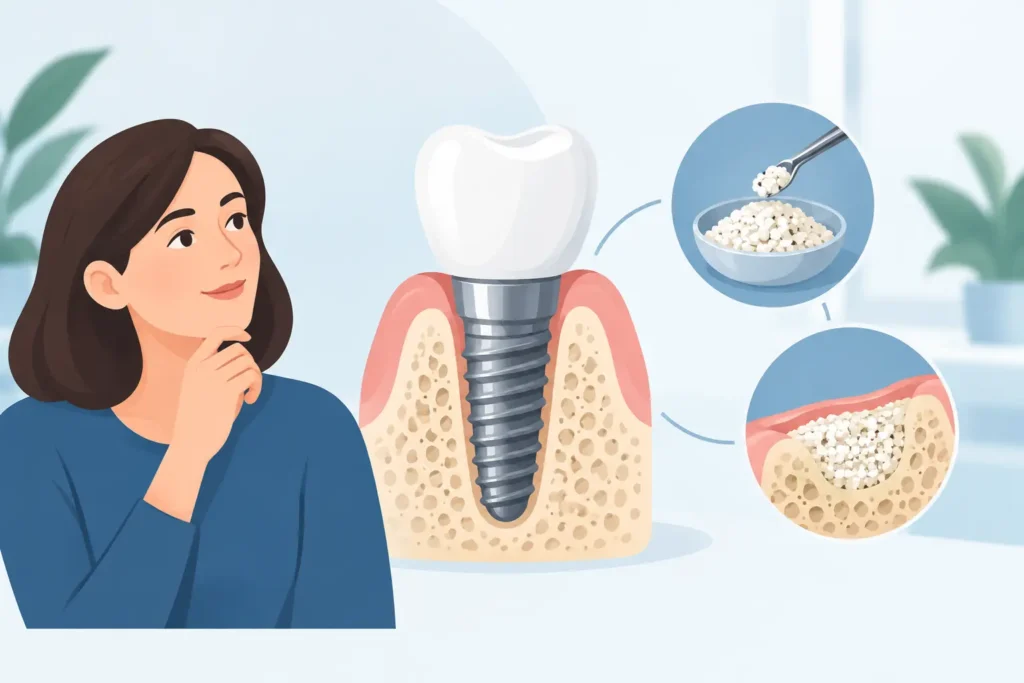
A missing tooth affects more than the space you see when you smile. After a tooth is lost, the jawbone in that area can begin to shrink because it no longer receives stimulation from the tooth root. That is why bone graft necessity is often part of an implant conversation. A graft is not automatically required, but when the supporting bone is too thin, short, or weakened, rebuilding it can make implant treatment safer and more dependable.
For patients in Forest Hills and throughout Queens, the question is usually simple: “Do I really need this extra procedure?” The honest answer depends on your individual bone, your health history, and the type of restoration you are considering. A careful exam and advanced imaging help your dental team answer that question with precision rather than guesswork.
What Does a Bone Graft Do?
A dental implant replaces a missing tooth root with a small post placed in the jaw. For an implant to function well over time, it needs enough healthy bone around it to remain stable under everyday chewing forces. When the bone volume is inadequate, a graft creates a foundation where new bone can develop.
The grafting material may come from your own bone, a donated human source processed for medical use, an animal-derived source, or a synthetic material. Your dentist will recommend an option based on the location and size of the area being rebuilt. The material acts as a framework that supports the body as it produces and integrates new bone.
This does not mean a bone graft “grows a new jaw” overnight. Healing is gradual. Over several months, the grafted area can become strong enough to support an implant or help preserve the contour of the jaw after an extraction.
When Bone Graft Necessity Becomes More Likely
Bone loss does not always cause discomfort, so it can be surprising to learn that an area needs support. Several circumstances make grafting more likely.
A Tooth Has Been Missing for a Long Time
The jawbone is designed to support tooth roots. Once a tooth is gone, the body may gradually resorb bone at that site. The longer the gap remains untreated, the greater the chance that the ridge will become narrower or shorter. This is especially common in the back of the mouth, where chewing pressure is significant.
Gum Disease Has Affected the Bone
Periodontal disease is an infection that can damage the gums and the bone that supports teeth. Even after gum health is stabilized, lost bone may leave too little support for an implant. Periodontal care remains essential before, during, and after implant treatment because long-term implant health depends on healthy surrounding tissue.
An Extraction Is Needed
An extraction can leave a socket that changes shape as it heals. In some cases, placing a small graft in the socket at the time of extraction helps preserve the available bone for a future implant. This approach, often called socket preservation, may reduce the need for more extensive grafting later. It does not guarantee that no additional work will be needed, but it can be a valuable preventive step.
The Bone Is Close to a Sinus or Nerve
In the upper back jaw, the maxillary sinus may limit the vertical bone available for an implant. In the lower jaw, important nerves require careful planning. A graft, sinus lift, or a different implant approach may be considered to provide adequate space while protecting these nearby structures.
Trauma, Infection, or Developmental Differences Are Present
A past injury, a dental infection, or naturally thin bone can affect the implant site. These situations require individualized planning. What worked for a friend or family member may not be appropriate for your anatomy.
How Your Dentist Decides Whether You Need One
A visual exam alone cannot show the full picture. Your dentist will review your medical and dental history, evaluate gum health, and use diagnostic imaging to measure the bone in three dimensions. This information helps determine the height, width, and density of the bone, as well as the position of sinuses and nerves.
At Renaissance Dental Forest Hills, guided implant planning can help translate those measurements into a precise treatment plan. Digital planning allows the team to evaluate whether an implant can be placed as-is, placed with grafting at the same visit, or placed after a separate healing period.
Some patients have enough bone for immediate implant placement following an extraction. Others benefit from a graft first, then implant placement after healing. In certain cases, an implant may be possible with a smaller-diameter or differently angled design, avoiding a larger graft. The best option balances stability, appearance, healing time, cost, and long-term predictability.
What the Grafting Process Feels Like
The thought of a bone graft can sound intimidating, but the procedure is usually performed with local anesthesia so the area is numb. Sedation options may also be available for patients who feel anxious or are having more extensive treatment. Your comfort and health should guide the experience from planning through recovery.
During the procedure, the dentist gently accesses the treatment area, places the graft material, and may cover it with a protective membrane. The site is then closed to support healing. When grafting is done at the time of an extraction, the process is often completed during the same appointment.
It is normal to have mild swelling, tenderness, or minor bleeding afterward. Most patients manage discomfort with the instructions and medications recommended by their dentist. You may be asked to eat softer foods temporarily, avoid smoking, and keep the area clean without disturbing it. Following these instructions matters because early healing protects the graft.
Healing time varies. A small socket-preservation graft may be ready for the next stage within a few months, while a larger graft can require a longer timeline. Your dentist will monitor healing and let you know when the site is ready for implant placement.
Is a Bone Graft Always Necessary for Dental Implants?
No. Many patients can receive implants without grafting. If the jaw has maintained sufficient healthy bone, adding a graft would not offer a meaningful benefit. A responsible treatment plan should never include a procedure simply because it is common.
At the same time, skipping a truly necessary graft can compromise the result. An implant placed without adequate support may be harder to position correctly, may not look as natural near the gumline, or may have a greater risk of future complications. The goal is not to add steps. It is to create a secure, natural-looking restoration that supports your bite and daily comfort.
Timing also matters. If a tooth needs to be removed, asking about future replacement before the extraction can preserve more options. Even if you are not ready for an implant immediately, socket preservation may help protect the bone needed for one later.
Questions Worth Asking at Your Consultation
A good implant consultation should leave you clear on why a recommendation is being made. Ask whether the graft is needed for implant stability, appearance, or both. Ask whether it can be performed at the same appointment as an extraction or implant placement, what the expected healing timeline is, and what alternatives may be appropriate in your case.
It is also reasonable to ask how your gum health, smoking or vaping habits, diabetes control, medications, and home care may affect healing. These factors do not automatically rule out treatment, but they can influence the plan and the support needed for a successful outcome.
A bone graft is not a detour from your smile goals. When it is genuinely needed, it is a practical step toward giving an implant the healthy foundation it deserves. The right plan should feel clear, personalized, and paced around your health, comfort, and long-term confidence when you eat, speak, and smile.
Comments are closed.
Proudly serving the surrounding areas:
Forest Hills NY • Queens NY • Rego Park NY • Kew Gardens NY • Maspeth NY
Middle VIllage NY • Woodside NY • Sunnyside NY • Jamaica Estates NY • Queens County NY