111-01 Queens
Boulevard,
Forest Hills, NY 11375

Latest Posts
A Missing Tooth Replacement Example for Every Smile
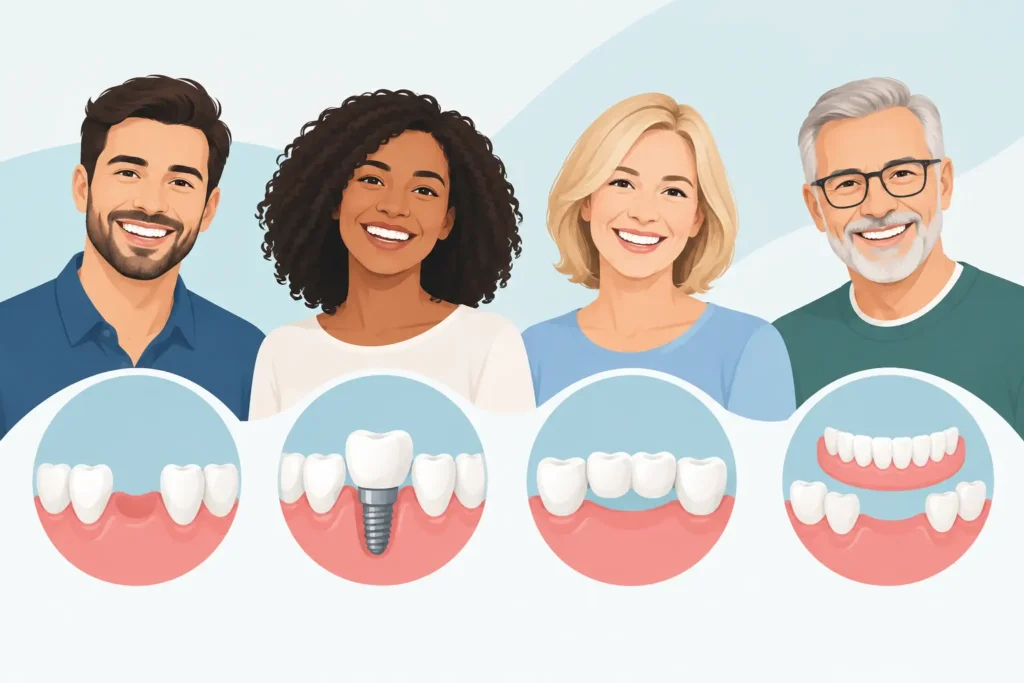
A missing tooth replacement example can make a difficult decision feel more concrete. The right answer is rarely the same for every patient. Replacing one visible front tooth may call for a different approach than restoring a back molar that carries the force of chewing, and a patient missing several teeth may have priorities that differ again.
At Renaissance Dental Forest Hills, treatment planning begins with the person behind the gap: your oral health, bone and gum condition, bite, appearance goals, timeline, and comfort. Modern options can restore much more than a space in your smile. They can help you chew comfortably, speak clearly, protect nearby teeth, and feel more like yourself.
Why replacing a missing tooth deserves attention
A missing tooth is not always painful, especially after the extraction site has healed. That does not necessarily mean it should be ignored. Teeth beside an open space can gradually shift or tip toward it. The opposing tooth may move farther out of its normal position because it no longer has a partner to bite against. Over time, these changes can affect your bite, cleaning routine, and the way force is distributed across your remaining teeth.
The jawbone under a missing tooth can also lose stimulation. Natural tooth roots transmit chewing forces to the bone. When a root is gone, the bone in that area may gradually shrink. The rate and amount vary from person to person, but earlier planning often gives patients more treatment choices.
There are exceptions. In some cases, monitoring a missing back tooth may be reasonable, particularly when it does not affect function or the surrounding bite. A dentist can help you understand the trade-offs rather than assume every gap needs the same solution.
Missing tooth replacement example: one front tooth
Imagine that a patient loses an upper front tooth after an accident or because of a tooth that cannot be saved. Appearance matters immediately, but so do speech, biting, gum contours, and the health of the surrounding teeth.
A dental implant may be an excellent long-term option in this situation. The implant is a small post placed in the jawbone to serve as an artificial tooth root. After healing, it supports a custom crown designed to blend with the neighboring teeth in shape and color. Because the implant stands on its own, the dentist does not need to reshape the healthy teeth next to the gap.
However, an implant is not always placed on the same day as an extraction. It depends on factors such as infection, available bone, gum condition, and the stability needed for a successful result. Some patients need bone grafting or a healing period first. A temporary tooth can often preserve the appearance of the smile while the permanent restoration is planned.
A bridge is another option. A traditional bridge uses crowns on the teeth adjacent to the missing tooth to support the replacement tooth in between. This can be a practical choice when the neighboring teeth already have large fillings, crowns, or other reasons to need coverage. With digital scanning and in-office CEREC technology, certain ceramic bridges may be designed, color-matched, and completed in a single appointment when clinically appropriate.
For a front tooth, the best choice is often guided by details that cannot be seen in a photograph: the gumline, bone level, bite, neighboring teeth, and the patient’s expectations for long-term maintenance.
Example: replacing a missing back molar
Now consider a patient missing a lower first molar. This tooth is less visible when smiling, but it does a great deal of work. A molar replacement needs to withstand substantial chewing pressure, especially for someone who enjoys a varied diet or already has other worn or missing teeth.
An implant-supported crown is frequently considered for a single missing molar. It replaces the tooth independently and avoids involving the adjacent teeth. Guided implant surgery can help the dentist plan implant placement with precision using detailed imaging and a surgical guide. After the implant integrates with the bone, a custom crown restores the chewing surface.
A fixed bridge may also be appropriate, especially when the teeth on either side already require crowns. The bridge can restore function without a surgical procedure, which may suit a patient’s medical history, preferences, or timeline. The trade-off is that the supporting teeth must be prepared for crowns, and the area beneath the replacement tooth requires careful daily cleaning.
Some patients ask whether they can simply leave a missing molar alone. The answer depends on the rest of their mouth. If the opposing tooth begins to over-erupt, nearby teeth shift, or chewing becomes uneven, replacement may help prevent more complicated concerns later. If the area is stable and does not compromise function, observation may be discussed. A complete exam provides the context that an online comparison cannot.
Example: several missing teeth in a row
When two or three neighboring teeth are missing, treatment may shift from replacing each tooth individually to rebuilding a section of the smile. A fixed implant-supported bridge can replace multiple teeth using strategically placed implants as support. This may provide a stable, natural-feeling result while reducing the number of implants needed compared with replacing every tooth separately.
A removable partial denture is another option. It can replace several missing teeth and may be a sensible choice when a patient needs an affordable, non-surgical treatment or has medical factors that make implant treatment less suitable. Modern partial dentures can be made to look natural, but they do require removal for cleaning and may feel different from fixed teeth. They also rely on surrounding teeth and tissues for support.
The decision often comes down to a balance of stability, cost, healing time, maintenance, and personal preference. There is no one-size-fits-all answer, and a good treatment plan should make the compromises clear before care begins.
Example: replacing all or most teeth
A person missing most or all teeth may be living with loose dentures, difficulty eating, sore spots, or a smile that no longer feels secure. Conventional full dentures can restore appearance and basic function, but they rest on the gums and may shift during speaking or eating. They also do not replace the stimulation once provided by tooth roots.
For eligible patients, implant-supported dentures offer added stability. Several implants can secure a removable overdenture or a fixed full-arch restoration. The appropriate design depends on bone volume, bite, health history, hygiene ability, and goals. Full-mouth rehabilitation requires detailed planning because it considers the entire bite, facial support, gum health, and long-term maintenance rather than simply filling individual spaces.
This type of care is a significant investment of time and resources. It should never be rushed. Digital imaging, guided surgery, and a clear provisional plan help patients understand each stage before treatment starts.
How your dentist helps choose the right option
A reliable recommendation starts with more than counting missing teeth. Your dentist will examine the teeth that remain, evaluate your gums, review your medical history, assess your bite, and use imaging to evaluate bone and anatomy. If an extraction is needed, timing matters. Preserving bone at the time of extraction may be recommended when future implant treatment is likely.
You should also discuss the daily reality of each option. Implants need the same careful brushing and professional maintenance as natural teeth. Bridges require cleaning underneath the replacement tooth with specialized flossing tools. Dentures need regular cleaning, periodic adjustments, and examination of the gums and supporting bone.
Convenience can matter, too. For busy Queens families and professionals, digital dentistry may reduce repeat visits for certain crowns and bridges. Yet speed should never override planning. An implant, bridge, or denture should be selected because it supports your health and goals, not simply because it is the fastest option.
Questions worth asking at your consultation
Ask which treatment would best protect your remaining teeth, whether your bone and gums support implant treatment, and what maintenance will be required over the years. It is also reasonable to ask about the expected treatment sequence, temporary tooth options, healing time, and what happens if additional dental needs are found during planning.
A missing tooth can change the way you eat, speak, and smile, but it does not have to define what comes next. A thoughtful exam and a clear conversation can turn an uncertain gap into a treatment plan that fits your health, schedule, and life.
Comments are closed.
Proudly serving the surrounding areas:
Forest Hills NY • Queens NY • Rego Park NY • Kew Gardens NY • Maspeth NY
Middle VIllage NY • Woodside NY • Sunnyside NY • Jamaica Estates NY • Queens County NY