111-01 Queens
Boulevard,
Forest Hills, NY 11375

Latest Posts
Oral Cancer Screening Guide for Every Checkup
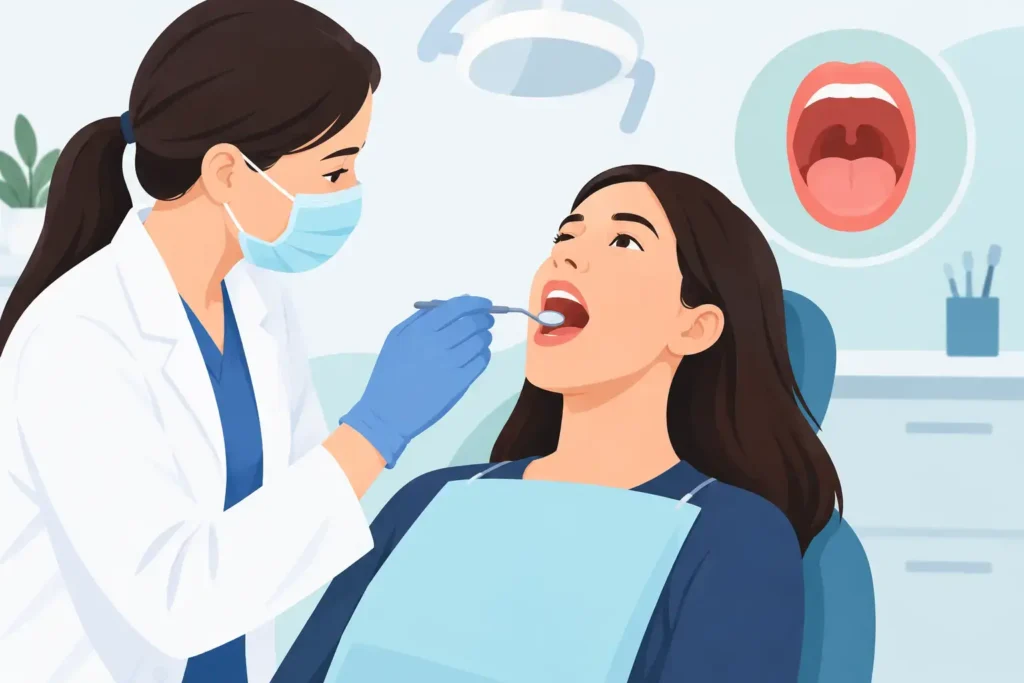
A routine dental visit does more than protect your teeth from cavities. It also gives your dentist a chance to look for changes in the tissues of your mouth, tongue, throat, and jaw. This oral cancer screening guide explains what that exam involves, why it belongs in regular preventive care, and when a symptom should be checked sooner rather than later.
Oral cancer can affect people of many ages and health backgrounds. Tobacco and heavy alcohol use raise the risk, but they are not the only factors. Human papillomavirus (HPV), sun exposure to the lips, a prior history of certain cancers, and age can also play a role. Most importantly, a painless change can still need attention. Early evaluation is one of the best reasons to keep up with dental checkups.
What happens during an oral cancer screening?
An oral cancer screening is usually quick, comfortable, and part of a comprehensive dental examination. Your dental team begins by asking about any new concerns, such as a sore that has not healed, persistent hoarseness, difficulty swallowing, or a lump you have noticed.
Next comes a visual and hands-on examination. Your dentist looks at the lips, cheeks, gums, roof and floor of the mouth, tongue, tonsil area, and back of the throat. They may use a light and mirror to see areas that are not easy for you to view at home. They will also gently feel the jaw, neck, and tissues under the chin for swelling, tenderness, or enlarged lymph nodes.
You may be asked to move your tongue from side to side or lift it toward the roof of your mouth. These small movements let the dentist inspect the sides and underside of the tongue, where changes can be easy to miss. The screening should not hurt. If an area is sore, tell your dental team so they can examine it carefully and keep you comfortable.
A screening is not a diagnosis. It is a focused search for unusual findings that may need monitoring, treatment, or referral for further evaluation. Many mouth sores and spots are caused by irritation, infections, canker sores, or dental appliances. Still, a persistent change deserves a professional opinion rather than guesswork.
Oral cancer screening guide: signs to watch for
You know your mouth better than anyone. Between visits, pay attention to changes that do not improve within two weeks. A sore spot after accidentally biting your cheek may heal quickly. A rough area caused by a sharp tooth can also improve once the source of irritation is corrected. But if a symptom lingers, returns often, or gets worse, schedule an exam.
Common warning signs include a sore that does not heal, a red or white patch, unexplained bleeding, a thickened area, or a lump in the mouth or neck. Other changes can include numbness, persistent pain, loose teeth without an obvious reason, difficulty chewing or swallowing, a change in your voice, or a feeling that something is caught in your throat.
Not every concerning sign is visible. Pain in one ear without an ear-related explanation, ongoing jaw stiffness, or a denture that suddenly no longer fits well may also warrant a conversation with your dentist or physician. Symptoms are not proof of cancer, and there is no benefit to panic. There is, however, real value in being prompt.
Changes on the tongue deserve attention
The sides and underside of the tongue can be difficult to inspect in a bathroom mirror. If you notice a persistent ulcer, patch, lump, or pain in this area, do not wait until your next cleaning if that appointment is months away. The same applies to the floor of the mouth, the soft palate, and the back of the throat.
If you use tobacco in any form, including cigarettes, cigars, pipes, chewing tobacco, or vaping products, regular screening is particularly worthwhile. Quitting can reduce health risks over time, and your dental team can discuss practical next steps without judgment.
Who should have regular screenings?
Every adult should receive an oral cancer screening as part of a routine dental examination. Regular care gives your dentist a baseline for what is normal in your mouth, making new changes easier to recognize. For patients with higher risk factors, consistency is especially important.
Risk increases with tobacco use and frequent heavy alcohol use, particularly when both are present. HPV-associated oral and throat cancers may affect people who do not smoke. Long-term sun exposure can increase the risk of lip cancer, especially for people who work or spend substantial time outdoors. A history of oral cancer, immune system suppression, or prior radiation treatment may also change the follow-up plan recommended by your health care team.
Age matters, but it should not be used as a reason to dismiss symptoms in younger adults. Oral and throat cancers can occur in people who feel otherwise healthy. A regular dental exam is a simple opportunity to check areas that are often overlooked.
What if your dentist finds something unusual?
Finding an unusual area does not automatically mean cancer. Your dentist will consider its appearance, location, size, texture, duration, and possible causes. A sore near a broken tooth, for example, may be related to ongoing friction. Your dentist may recommend smoothing the tooth, adjusting an appliance, treating an infection, or allowing a short healing period before rechecking the tissue.
If an area does not heal as expected or has features that need closer evaluation, you may be referred to an oral surgeon, ear, nose, and throat specialist, or another appropriate provider. Further evaluation may include imaging or a biopsy, which is the only way to determine whether cells are cancerous. This step can sound intimidating, but it provides the clarity needed to make informed decisions.
Bring up any symptoms even if they seem minor or embarrassing. Sharing details about tobacco use, alcohol use, medications, recent illness, and how long a symptom has been present helps your care team make a more accurate assessment.
How to make screening part of preventive care
The easiest approach is to keep regular dental examinations and cleanings on your calendar. For many people, that means visits every six months, though your personal schedule may differ based on periodontal health, restorative needs, age, and medical history. Preventive visits allow your dentist to assess your teeth and gums while also checking the soft tissues of your mouth.
At home, take a moment once a month to notice what feels normal. Look at your lips, gums, cheeks, tongue, and the roof of your mouth in good light. You are not trying to diagnose yourself. You are simply becoming familiar with your baseline so that a meaningful change stands out.
Good daily oral hygiene remains important, too. Brushing twice a day with fluoride toothpaste, cleaning between teeth, staying hydrated, and addressing broken teeth or poorly fitting dentures can reduce irritation and support a healthier mouth. These habits do not replace a screening, but they support the preventive care that makes early concerns easier to identify.
A convenient exam can remove one more reason to wait
Busy schedules often turn a small concern into a delayed appointment. If you have a sore, patch, lump, or swallowing change that has persisted for two weeks, contact a dental or medical professional rather than waiting for your next routine visit. Same-day and flexible appointment options can be particularly helpful when a new concern needs timely attention.
At Renaissance Dental Forest Hills, comprehensive exams are approached with the same care given to every aspect of your oral health. Whether you are coming in for a cleaning, a child’s checkup, restorative treatment, or a new concern, your comfort and health remain the priority.
A quick conversation and examination can replace uncertainty with a clear next step. If something in your mouth has not healed or simply does not feel right, make time to have it checked.
Comments are closed.
Proudly serving the surrounding areas:
Forest Hills NY • Queens NY • Rego Park NY • Kew Gardens NY • Maspeth NY
Middle VIllage NY • Woodside NY • Sunnyside NY • Jamaica Estates NY • Queens County NY