111-01 Queens
Boulevard,
Forest Hills, NY 11375

Latest Posts
Dental Bridge Versus Implant: Which Fits?
A missing tooth can change more than a photo or a meal. It can make chewing feel uneven, allow neighboring teeth to shift, and leave you wondering how long you can safely wait. When considering a dental bridge versus implant, the right answer is rarely just about which option looks better. Both can restore your smile beautifully. The better choice depends on your teeth, gums, bone health, timeline, budget, and goals for the years ahead.
At Renaissance Dental Forest Hills, treatment planning starts with a close look at the whole picture, not a one-size-fits-all recommendation. A bridge may be the practical, efficient choice for one patient, while an implant may offer another patient the strongest long-term foundation.
Dental Bridge Versus Implant: The Core Difference
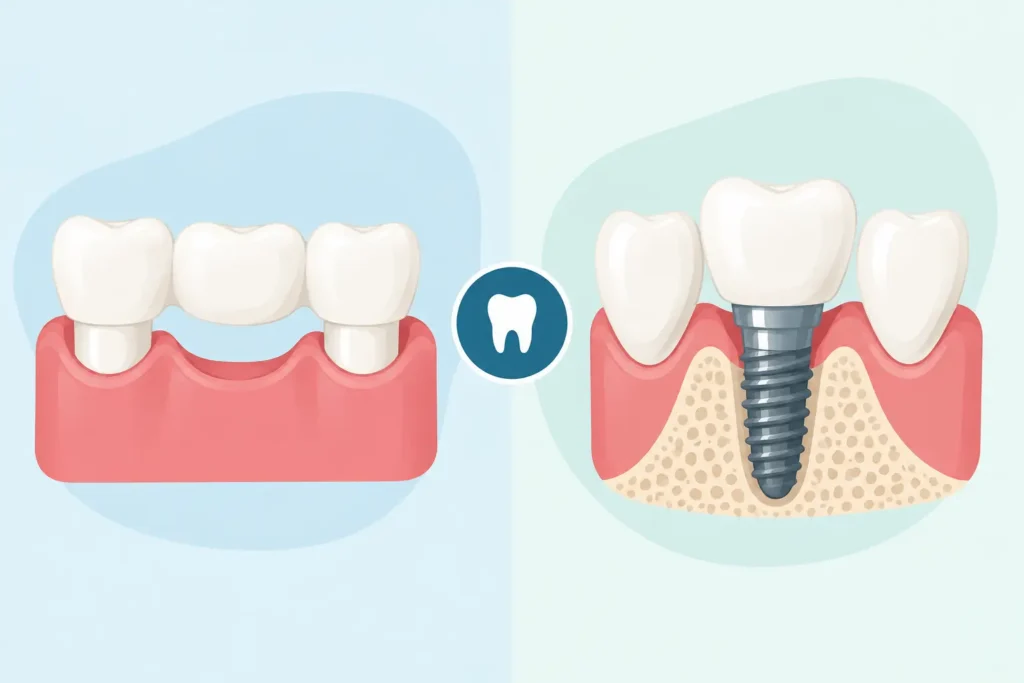
A dental bridge replaces a missing tooth by connecting an artificial tooth, called a pontic, to crowns on the teeth beside the gap. Those neighboring teeth support the restoration. A traditional bridge is fixed in place, meaning it does not come out at night like a removable partial denture.
A dental implant replaces the missing tooth root first. A small titanium implant is placed in the jawbone, where it integrates with the bone over time. Once it is ready, a custom crown is attached to the implant. The result is a replacement tooth that stands independently rather than relying on adjacent teeth.
Both options are designed to look natural and help you speak and chew with confidence. The distinction is in how they are supported and what preparation each requires.
When a Dental Bridge May Be the Better Choice
A bridge can be an excellent solution when the teeth on either side of a gap already need crowns because of large fillings, fractures, or extensive wear. In that situation, placing crowns on those teeth may be part of their treatment anyway, and the bridge restores the missing tooth at the same time.
Timing also matters. A bridge is often completed more quickly than an implant because it does not require a healing period for the jawbone. For busy Queens patients who need to restore a visible tooth or return to comfortable chewing promptly, this can be a meaningful advantage. In appropriate cases, CEREC digital dentistry may allow a precisely designed, color-matched ceramic bridge to be completed in a single appointment.
A bridge may also be appropriate when implant surgery is not advisable at the moment. Certain medical conditions, uncontrolled gum disease, active infection, limited bone, smoking, or medications that affect bone healing can change the treatment plan. These factors do not automatically rule out implants, but they deserve careful discussion before moving forward.
The trade-off is that a traditional bridge requires reshaping the supporting teeth to make room for crowns. Even healthy enamel must be reduced. Bridges also do not replace the tooth root, so the bone beneath the missing tooth can gradually shrink over time.
When an Implant May Be the Better Choice
An implant is often preferred when the teeth next to the missing space are healthy and intact. Because the implant stands on its own, those neighboring teeth do not need to be filed down for crowns. This conserves natural tooth structure, which is a major long-term benefit.
Implants also help stimulate the jawbone in the area where the tooth root was lost. That stimulation can help limit bone loss and preserve facial support. For a single missing tooth, an implant with a custom crown often feels and functions very much like a natural tooth.
With consistent home care and professional maintenance, implants can last for many years. The crown attached to an implant may eventually need repair or replacement from normal wear, but the implant itself is designed as a durable foundation. This makes an implant especially appealing for patients who want to make a long-range investment in their oral health.
The process does take patience. After placement, the implant generally needs time to heal and bond with the bone before the final crown is placed. Some patients also need bone grafting before implant surgery, which can add time. Guided implant surgery helps plan placement precisely, but healing cannot be rushed.
Comparing Cost, Time, and Long-Term Value
The up-front cost of a bridge is often lower than the cost of a single implant and crown. Insurance coverage can also differ significantly by plan. A bridge may receive more immediate coverage in some cases, while implants may have limited benefits or separate restrictions.
However, the initial fee is only one part of the decision. A bridge usually has a finite lifespan and may need replacement after years of use. If a supporting tooth develops decay, a crack, or nerve damage, the entire bridge can be affected. An implant generally has a higher initial cost, but it avoids placing crowns on healthy adjacent teeth and may provide lasting value over time.
There is no universal financial winner. The most useful question is not simply, “Which costs less today?” It is, “Which option best protects my oral health and fits my priorities?” A clear treatment estimate and an explanation of expected maintenance can make that choice feel far less overwhelming.
How Daily Care Differs
Both bridges and implants need excellent oral hygiene. Neither is a replacement for brushing, flossing, professional cleanings, and routine exams.
With a bridge, plaque can collect where the replacement tooth meets the gumline and beneath the pontic. Cleaning under the bridge requires special attention. Floss threaders, interdental brushes, or water flossers may help clean areas that ordinary floss cannot reach easily. Decay can still form at the edges of the crowns supporting the bridge.
An implant crown is brushed and flossed much like a natural tooth, although your dental team may recommend specific brushes or flossing techniques based on its position. Implants cannot get cavities, but the gums and bone around them can become inflamed or infected. This condition, called peri-implant disease, can threaten implant stability if it is not addressed early.
For either restoration, gum health is central. Bleeding, swelling, persistent bad breath, or discomfort around a bridge or implant should be evaluated rather than ignored.
What Happens During Treatment?
For a bridge, the dentist prepares the supporting teeth, takes a digital scan or impression, and designs the restoration to match your bite and natural tooth color. Depending on the case and material selected, the bridge may be created and placed in one visit with in-office CEREC technology or completed over more than one appointment.
For an implant, planning begins with a comprehensive exam and imaging to evaluate bone, gum tissue, bite forces, and the location of nearby structures. During guided implant surgery, the implant is placed into the jawbone. After healing, the final crown is designed to blend with your smile and function comfortably with your bite.
Neither treatment should feel like a decision you have to make alone. A good consultation includes room for questions about anesthesia, recovery, appearance, cleaning, cost, and what happens if future dental work is needed.
Situations That Can Change the Recommendation
The location of the missing tooth matters. Back teeth handle greater chewing pressure, while front teeth place a greater emphasis on appearance and speech. A single missing tooth is different from several missing teeth in a row, and a full arch of missing teeth calls for a different conversation altogether.
Your bite also matters. Patients who clench or grind may need a protective nightguard regardless of whether they choose a bridge or an implant. Untreated grinding can damage natural teeth, ceramic restorations, and implant crowns.
If the tooth was lost recently, do not assume you must decide immediately, but do not wait indefinitely either. Bone changes can begin after an extraction. Prompt evaluation helps preserve options, including possible socket preservation or implant planning when appropriate.
A Decision Built Around Your Smile
A bridge can provide a beautiful, fixed replacement efficiently, especially when neighboring teeth already need crowns. An implant can preserve adjacent teeth and help maintain jawbone, but it requires surgery, healing time, and a higher initial investment. Both treatments can be dependable when they are carefully planned and maintained.
The most helpful next step is a personal evaluation that looks beyond the gap in your smile. When your comfort, health, schedule, and long-term goals are all part of the conversation, choosing a replacement tooth becomes a decision you can feel good about.
Comments are closed.
Proudly serving the surrounding areas:
Forest Hills NY • Queens NY • Rego Park NY • Kew Gardens NY • Maspeth NY
Middle VIllage NY • Woodside NY • Sunnyside NY • Jamaica Estates NY • Queens County NY