111-01 Queens
Boulevard,
Forest Hills, NY 11375


Latest Posts
Invisalign Versus Metal Braces: Which Fits?
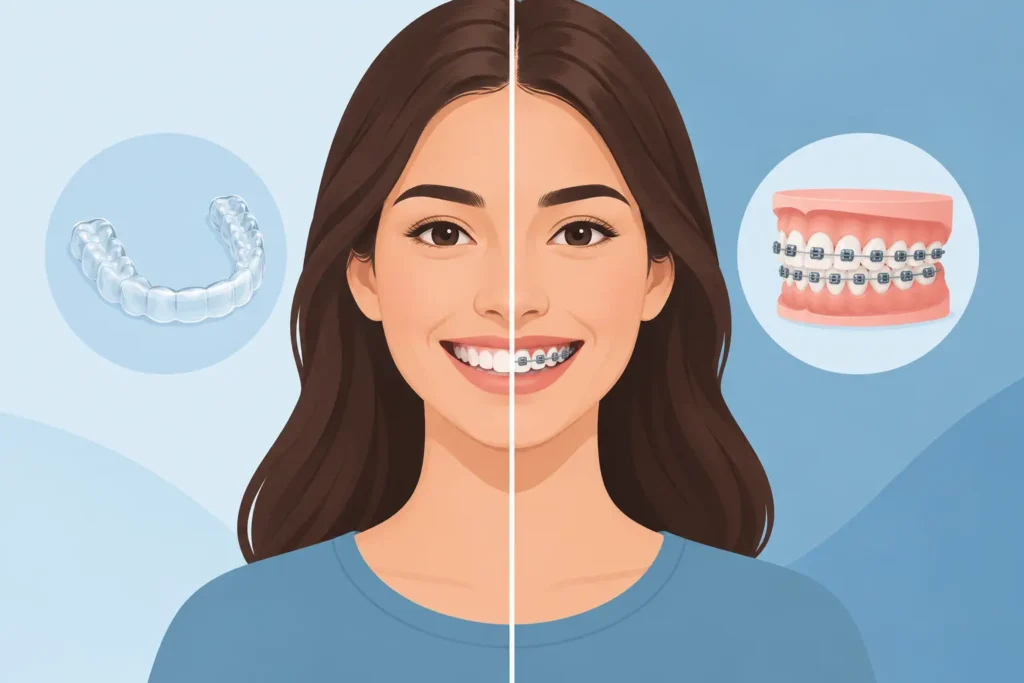
A straighter smile should fit your real life – whether that means presenting at work, caring for a busy family, or simply feeling more comfortable in photos. When patients ask about Invisalign versus metal braces, the best choice is rarely about appearance alone. The right treatment depends on how your teeth move, your bite, your daily habits, and the level of flexibility you need during treatment.
Both options can create healthy, attractive results. A personalized orthodontic evaluation helps determine which approach can move your teeth safely and predictably while supporting your long-term oral health.
Invisalign Versus Metal Braces: The Real Difference
Invisalign treatment uses a series of clear, custom-made aligners. Each aligner is designed to apply gentle pressure and guide teeth toward their planned positions. You wear the aligners for most of the day, removing them for meals, brushing, flossing, and special occasions when appropriate.
Metal braces use brackets bonded to the teeth and a wire that is adjusted over time. Because the appliance stays in place, braces work continuously without relying on the patient to remember to put them back in. Braces are highly capable and have a long record of treating simple and complex orthodontic concerns.
Neither option is automatically better. Clear aligners can be an excellent solution for many teens and adults, while metal braces may provide greater control for certain significant bite corrections or more complicated tooth movements.
How Invisalign Treatment Moves Teeth
Clear aligners are planned digitally before treatment begins. Your dentist takes detailed scans of your teeth and uses treatment-planning technology to map the intended movement step by step. Rather than relying on traditional impressions, digital scanning provides a detailed view of the teeth and bite and makes the planning process more comfortable for many patients.
Most patients change to a new set of aligners on a schedule determined by their dentist. Small tooth-colored attachments may be placed on selected teeth to give the aligners more grip. These attachments are common, subtle, and temporary. In some cases, elastic bands or carefully shaped spaces between teeth may also be part of the treatment plan.
The most decisive factor with Invisalign is wear time. Aligners typically need to be worn about 20 to 22 hours each day. Removing them for a long lunch, forgetting them overnight, or leaving them out frequently can slow progress and affect results. For patients who can commit to the routine, that removable design is often one of Invisalign’s greatest advantages.
How Metal Braces Move Teeth
Braces use brackets and wires to apply steady force. At adjustment visits, the wire may be changed or tightened to continue guiding the teeth. Additional appliances, springs, or elastics can be used when needed to address spacing, crowding, tooth position, or bite alignment.
Since braces remain attached to the teeth, they can be especially helpful for patients who may struggle to wear removable aligners consistently. They also allow the dental team to maintain direct control of tooth movement around the clock. For children and teens, this can reduce the pressure of managing a removable appliance every day.
Modern metal braces are smaller and more comfortable than many people remember. Still, brackets and wires can rub the cheeks or lips at first, and occasional adjustments may cause temporary soreness. Orthodontic wax and a few days of adaptation usually make these early stages easier.
Appearance, Comfort, and Everyday Routines
For many adults, the discreet appearance of Invisalign is the deciding factor. Clear aligners are difficult to notice in everyday conversation, which can make them appealing for professionals, students, and anyone who prefers a less visible orthodontic option. They can be removed for an important event, but they must go back in promptly to keep treatment on track.
Metal braces are more visible, although some patients enjoy choosing colorful bands at adjustment visits. Braces cannot be removed for photos, meals, or sports. That permanence can feel less convenient, but it also means there is no aligner case to misplace and no question about whether enough hours were logged that day.
Eating is another practical difference. With Invisalign, you remove aligners before eating or drinking anything other than water. You can continue enjoying foods such as popcorn, apples, nuts, and crusty bread, then brush or rinse before reinserting the aligners. With braces, certain hard, sticky, and chewy foods should be avoided because they can damage brackets or wires.
Oral hygiene also changes. Aligners come out for brushing and flossing, making daily cleaning relatively straightforward. Braces require more careful brushing around brackets and wires, along with floss threaders, interdental brushes, or a water flosser. Either treatment can support a healthier smile when hygiene is consistent, but neither replaces routine exams and cleanings.
Treatment Time and Predictability
Treatment length varies widely. Some patients need only a limited correction for minor crowding or spacing, while others need comprehensive treatment to improve their bite and smile alignment. Many orthodontic cases take somewhere around 12 to 24 months, but your individual timeline may be shorter or longer.
Invisalign treatment can be very predictable when aligners are worn as prescribed and visits are kept on schedule. However, treatment may take longer if aligners are not worn enough, if teeth do not track as expected, or if refinement aligners are needed near the end. Refinements are not necessarily a problem – they are often a normal way to fine-tune the final result.
Braces keep working full time, which can make progress less dependent on daily patient compliance. They still require regular adjustments, careful hygiene, and cooperation with elastics when prescribed. Broken brackets or wires can also create delays, so following food guidelines matters.
Which Concerns May Favor One Option?
Invisalign can treat many common concerns, including mild to moderate crowding, gaps, rotated teeth, and certain bite issues. It may be particularly attractive for adults who want a discreet approach and are prepared to wear aligners consistently. Teen patients can also be good candidates when they are responsible with wear time and aligner care.
Metal braces may be recommended for more complex cases, including pronounced crowding, challenging rotations, significant bite discrepancies, or teeth that need very precise movement. They can also be a practical choice for younger patients who are unlikely to keep track of removable aligners.
The condition of your teeth and gums matters just as much as alignment. Cavities, gum inflammation, untreated periodontal disease, or damaged restorations should be addressed before orthodontic movement begins. Moving teeth is healthiest when the foundation beneath them is stable.
Cost, Insurance, and Long-Term Value
The cost of Invisalign and metal braces depends on the complexity of treatment, the anticipated length of care, and the appliances needed to achieve the planned result. In some cases, the cost difference is modest; in others, it is more substantial. Dental insurance may offer orthodontic benefits, but coverage limits and eligibility rules vary.
When comparing estimates, ask what is included. A clear treatment plan should address diagnostic records, appointments, attachments or adjustments, potential refinements, and retainers. Retainers are essential after either Invisalign or braces. Teeth naturally tend to shift over time, and wearing retainers as directed protects the investment you have made in your smile.
Choosing solely by the initial price can be misleading. The better value is treatment that fits your clinical needs and your routine well enough to complete successfully.
Start With a Personalized Conversation
At Renaissance Dental Forest Hills, orthodontic planning begins by listening to what you want to change and evaluating the health of your teeth, gums, and bite. Digital technology can help make the process clear, while a thoughtful exam determines whether clear aligners or braces offer the more reliable path for your smile.
If you are balancing a demanding schedule in Queens, ask practical questions at your consultation: Can you commit to wearing aligners nearly all day? Do you have a bite concern that may respond better to fixed braces? What will keeping your teeth clean look like with each option? The answer that fits your life and your oral health is the one worth choosing.
Comments are closed.
Proudly serving the surrounding areas:
Forest Hills NY • Queens NY • Rego Park NY • Kew Gardens NY • Maspeth NY
Middle VIllage NY • Woodside NY • Sunnyside NY • Jamaica Estates NY • Queens County NY