111-01 Queens
Boulevard,
Forest Hills, NY 11375



Latest Posts
Does Invisalign Hurt? What to Expect Each Week
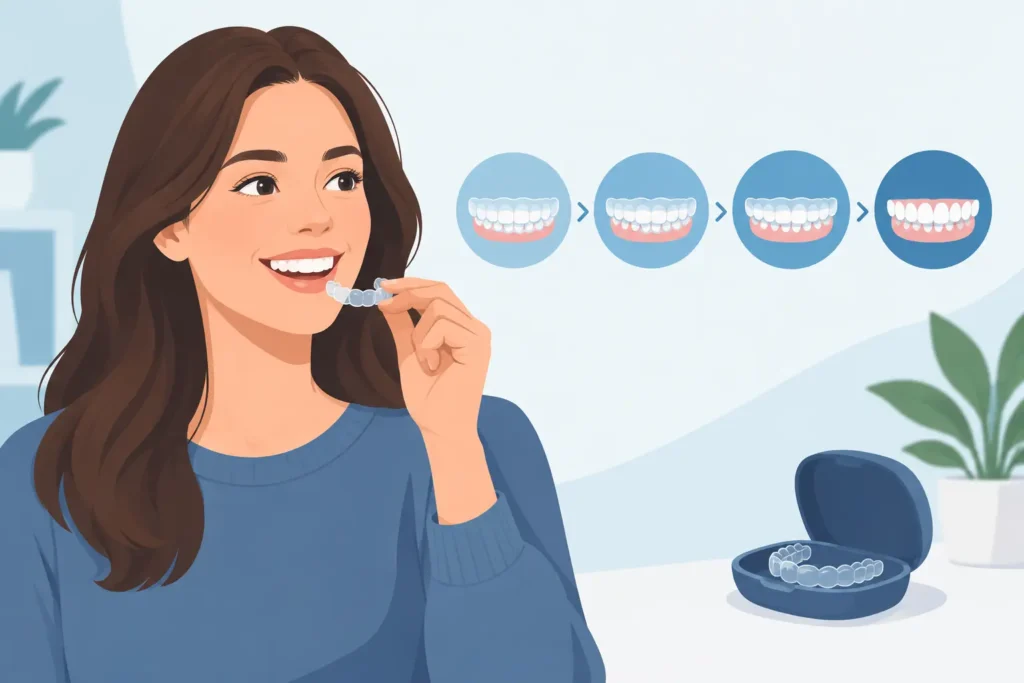
That first new aligner can feel surprisingly snug, especially when you take it out for breakfast. So, does Invisalign hurt? For most patients, the answer is no – not in the sense of sharp or severe pain. Invisalign more commonly causes temporary pressure, tooth sensitivity, or mild soreness as your teeth begin to move. That sensation is usually a sign that the aligners are doing their job.
Clear aligner treatment is designed around gradual, controlled tooth movement. Each set of custom trays applies gentle force in a planned direction. Your teeth, the bone around their roots, and the supporting tissues need time to adjust. A little tenderness can happen during that adjustment, but it should be manageable and short-lived.
Does Invisalign Hurt at the Beginning?
The first few days of treatment are often the most noticeable. Your aligners are new, your mouth is getting used to wearing them, and you may feel pressure when you bite down or remove the trays. Some people describe it as the feeling of having recently tightened braces, while others notice only a mild sense that their teeth are being held firmly.
Tenderness is most likely during the first 24 to 72 hours after starting a new set of aligners. It may be more noticeable when chewing, particularly if a tooth is making a larger planned movement. Starting a new tray before bed can help because you will sleep through part of that early adjustment period.
The trays themselves should not feel sharp. However, your tongue, cheeks, or lips may need a short adjustment period as they become accustomed to the edges of the plastic. If one edge is consistently rubbing or creating a sore spot, do not try to reshape the aligner yourself. Your dental team can check the fit and smooth an area if appropriate.
Why Clear Aligners Can Feel Uncomfortable
Invisalign uses gentle force, but “gentle” does not always mean you feel nothing. Teeth are anchored by ligaments and supported by bone. When an aligner places steady pressure on a tooth, the body gradually remodels the bone so that tooth can shift into its planned position. This biologic process can create soreness similar to a bruised feeling when you press on a tooth or bite into something firm.
The level of discomfort depends on the individual treatment plan. Closing spaces, correcting crowding, rotating teeth, or changing a bite can place pressure on different areas at different times. Attachments – small, tooth-colored shapes placed on certain teeth to help aligners grip and guide movement – can also make trays feel tighter when you insert or remove them. They do not usually hurt on their own, but they can make the early days of a new tray more noticeable.
Some patients also receive small amounts of interproximal reduction, sometimes called IPR. This creates carefully measured space between teeth when needed for alignment. It is generally not painful, although temporary sensitivity is possible for some patients. Your dentist should explain why it is recommended and what to expect before treatment begins.
How Long Does Invisalign Discomfort Last?
For most people, the soreness from a new aligner fades within a few days. Since trays are commonly changed every one to two weeks, there can be a brief adjustment period with each new set. Many patients find that this becomes less noticeable once they understand the rhythm of treatment.
It is also normal for one tray to feel tighter than another. Each stage is planned to move specific teeth, so the sensation can shift from one part of the mouth to another. A tray that feels snug at first should become easier to seat and remove as you wear it consistently.
Wear time matters. Invisalign aligners are typically worn about 20 to 22 hours a day, with removal for meals and oral hygiene. If trays are left out for long stretches, teeth may begin to rebound toward their previous positions. Putting the aligners back in can then feel much tighter and more uncomfortable. Consistent wear helps your teeth move predictably and may make each transition easier.
Practical Ways to Stay Comfortable
A few simple habits can make the first days of a new aligner more comfortable. Choose softer foods if chewing feels tender, and avoid biting directly into hard foods such as crusty bread, apples, or nuts until the pressure settles. Cutting food into smaller pieces can help without changing your nutrition or routine too much.
Cold water may feel soothing for mild sensitivity. If you use an over-the-counter pain reliever, follow the product directions and consider any medical guidance you have received from your physician. Do not place aspirin directly on your gums or teeth. It can irritate oral tissues and does not treat the cause of soreness.
If your dentist has recommended aligner seating aids, use them as directed. These soft tools can help ensure the trays are fully seated over your teeth, especially around attachments. A fully seated aligner is important for tracking, but you do not need to bite aggressively or force a tray into place.
Keep your aligners and teeth clean as well. Brushing and flossing before reinserting trays helps reduce the chance of trapping food particles against the teeth and gums. Clean aligners are more comfortable to wear and support the healthy mouth you want throughout orthodontic treatment.
When Invisalign Pain Is Not Normal
Mild pressure is expected. Sharp pain, swelling, bleeding gums, a tray that will not fit, or pain that does not improve after several days deserves a call to your dental office. These symptoms can point to an aligner fit issue, gum irritation, tooth decay, a cracked tooth, or another concern unrelated to the aligner itself.
Contact your dentist promptly if a tooth becomes intensely sensitive to heat or cold, hurts without pressure, feels loose beyond the expected mild movement, or develops facial swelling. Clear aligners should not prevent you from addressing a dental problem. In fact, routine exams and cleanings remain valuable during Invisalign treatment because your dentist can monitor your teeth, gums, bite, and overall progress.
Do not skip ahead to the next set of aligners because the current set feels uncomfortable. Moving forward too soon can interfere with the planned sequence and may cause trays not to fit correctly. Likewise, do not stop wearing your aligners without guidance. A quick check can often identify whether you need an adjustment, a replacement tray, or simply reassurance that the pressure is within a normal range.
Invisalign Comfort Compared With Braces
Many patients choose clear aligners because they are generally more comfortable than traditional braces. There are no brackets or wires to poke the cheeks, and aligners can be removed for eating and brushing. That said, removable does not mean effort-free. You still need to wear them consistently, clean them carefully, and attend progress visits so your treatment stays on track.
Traditional braces and Invisalign both move teeth through controlled force. The difference is often in the type of irritation patients experience. Braces may create sore spots from hardware, while aligners more often create temporary pressure from each new tray. The best option depends on your bite, the complexity of your tooth movement, your lifestyle, and how reliably you can wear removable aligners.
At Renaissance Dental Forest Hills, Invisalign planning begins with a careful evaluation of your smile, bite, and oral health. A clear explanation of the process can make treatment feel far less intimidating, whether you are preparing for a special event, improving a crowded smile, or making a long-considered change.
A little pressure at the start of a new tray is usually temporary. What should last is the confidence that comes from knowing what is normal, protecting your oral health, and having a dental team ready to help if something does not feel right.
Comments are closed.
Proudly serving the surrounding areas:
Forest Hills NY • Queens NY • Rego Park NY • Kew Gardens NY • Maspeth NY
Middle VIllage NY • Woodside NY • Sunnyside NY • Jamaica Estates NY • Queens County NY