111-01 Queens
Boulevard,
Forest Hills, NY 11375


Latest Posts
Ceramic Versus Metal Crowns for Your Smile
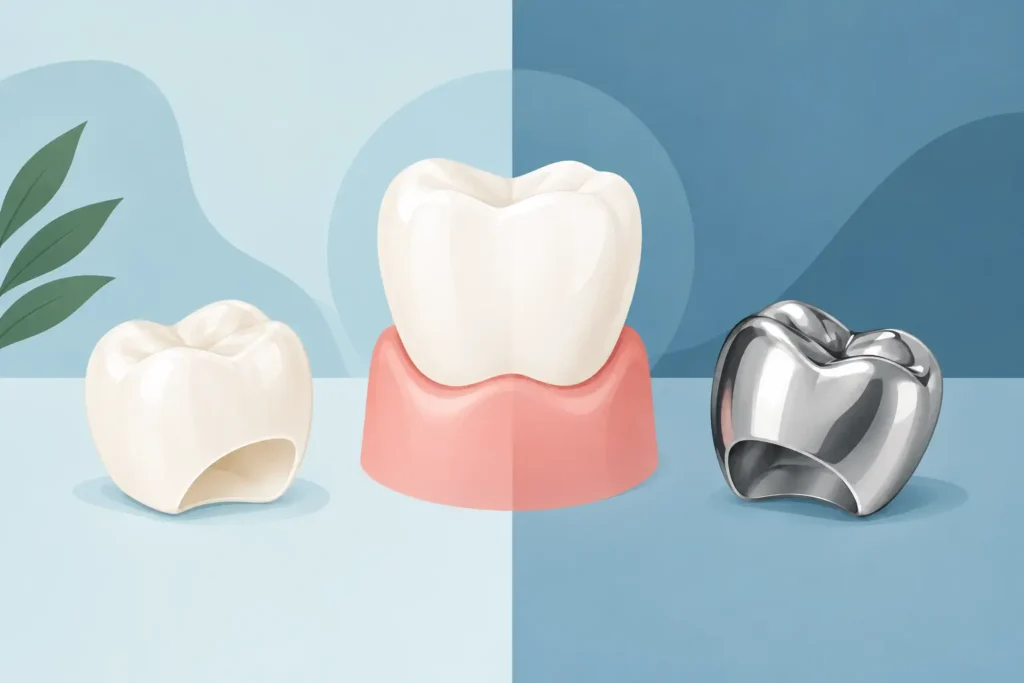
A crown has a practical job: protect a tooth that has been weakened by decay, a large filling, a fracture, or root canal treatment. But it also has to work every time you bite, speak, and smile. When patients ask about ceramic versus metal crowns, they are usually weighing two real priorities: a restoration that looks like a natural tooth and one that can stand up to years of daily use.
The right answer depends less on a single “best” material and more on the tooth being treated, your bite, the condition of surrounding teeth, and what matters most to you. A well-planned crown should feel comfortable, support your oral health, and fit naturally into your life.
Ceramic Versus Metal Crowns: The Key Differences
Ceramic crowns are tooth-colored restorations made from advanced dental materials. Depending on the clinical need, they may be made from porcelain, lithium disilicate, zirconia, or layered combinations of these materials. Their greatest advantage is appearance: ceramic can be matched to the shade, translucency, and character of neighboring teeth.
Metal crowns are commonly made from gold alloys or other durable dental alloys. They are not tooth-colored, but they have a long record of strength and reliable performance. Another option, porcelain-fused-to-metal, combines a metal interior with a porcelain outer layer. It can offer a more natural appearance than full metal, although a dark line may become visible near the gumline over time, especially if gums recede.
The material is only one part of the outcome. Precise preparation, accurate fit, bite adjustment, and thoughtful shade selection all contribute to how well a crown looks and lasts.
When a Ceramic Crown Makes Sense
For a tooth that shows when you smile, ceramic is often the preferred choice. Modern ceramics can reflect light in a way that closely resembles natural enamel. This makes them an excellent option for front teeth, visible premolars, and patients who want their dental work to blend in rather than stand out.
Ceramic may also be a good fit for back teeth. High-strength zirconia is especially useful in areas that receive substantial chewing pressure. Not every ceramic is equally strong, however. A highly translucent material that creates a beautiful front-tooth result may not be the ideal choice for a molar in a patient who clenches or grinds. Your dentist can select a ceramic based on where the crown will sit and how much force it must handle.
For busy patients, the process may be just as meaningful as the material. At Renaissance Dental Forest Hills, CEREC digital dentistry can allow certain ceramic crowns to be designed, milled, and placed in one appointment. Instead of traditional impressions and a temporary crown, a digital scan creates a detailed 3-D model of the tooth. The crown is then color-matched and crafted in-office when appropriate for your case.
Same-day treatment is not simply about saving time. It can reduce the inconvenience of a temporary restoration, an additional numbness appointment, and repeated trips from work, school, or family responsibilities.
Benefits of ceramic crowns
Ceramic crowns offer a natural color match and are metal-free, which may be appealing to patients with metal sensitivities or aesthetic concerns. They are also resistant to staining and can be shaped carefully to complement the surrounding teeth.
Their limitations are worth discussing honestly. Some ceramic materials can wear or chip if they are not selected and adjusted properly, particularly in patients with heavy bite forces. Ceramic crowns also tend to cost more than certain metal options. For many patients, though, the cosmetic benefit and modern strength of the material make that investment worthwhile.
When a Metal Crown May Be the Better Choice
Metal is exceptionally durable. Because it can withstand significant biting pressure without cracking, it may be a sensible choice for a hard-working back molar, especially when appearance is less of a concern. Gold alloys, in particular, have a long history in dentistry and tend to be gentle on opposing teeth compared with some harder materials.
A metal crown can sometimes require less tooth reduction than a ceramic crown because the material remains strong even in a thinner layer. Preserving healthy tooth structure is always valuable, so this can be an important advantage when the clinical situation allows it.
The obvious trade-off is visibility. A full metal crown does not match natural enamel. For a lower molar that is rarely seen, that may not matter. For an upper premolar that appears in a broad smile, it may matter a great deal. This is a personal decision as well as a clinical one.
Some patients also ask about metal allergies. True allergic reactions to dental metals are uncommon, but they can occur. Let your dental team know about known metal allergies, skin sensitivities, or past reactions to jewelry or medical devices so material options can be reviewed carefully.
What About Porcelain-Fused-to-Metal Crowns?
Porcelain-fused-to-metal crowns, often called PFMs, have been used successfully for decades. Their metal substructure provides support, while porcelain covers the visible surface. They can be a useful restoration in specific circumstances, including certain bridge designs.
Still, PFMs involve compromises. The porcelain layer can chip, exposing the metal underneath. In addition, the opaque metal foundation may make it harder to achieve the lifelike translucency possible with all-ceramic restorations. If gum recession develops later, the edge of the metal may show at the gumline.
For some teeth, a PFM remains a dependable option. For others, newer ceramic materials offer a more natural result with excellent strength. The best choice should come from an examination and a conversation, not a one-size-fits-all rule.
Your Bite Can Change the Decision
A crown does not function alone. It meets the teeth above or below it thousands of times each day. If you grind your teeth, clench during stressful periods, have worn enamel, or have a bite that places unusual pressure on one area, those details affect material selection.
A very strong crown is not automatically the best crown if it is too abrasive against the opposing tooth or not adjusted to your bite. Your dentist will evaluate your chewing patterns, the condition of nearby teeth, and whether a night guard may help protect both your natural teeth and restoration.
The amount of healthy tooth remaining matters, too. A tooth with a deep fracture, extensive decay, or prior root canal treatment may need a different design than a tooth with a smaller area of damage. In some cases, a filling, onlay, veneer, or other conservative treatment may be more appropriate than a full crown.
Questions to Ask Before Choosing a Crown
A clear treatment conversation can make the decision easier. Ask which material is recommended for your specific tooth and why. Find out whether the crown will be visible when you smile, how your bite affects the recommendation, and whether the restoration can be completed in one visit.
It is also reasonable to ask about the expected appearance, durability, care needs, and costs of available options. If you have a history of grinding, sensitivity, gum recession, or metal allergies, bring that up early. These details help your dentist create a treatment plan that is both functional and personal.
Caring for Any Crown
Ceramic and metal crowns both need consistent home care. Brush twice daily with fluoride toothpaste, clean between teeth every day, and keep regular dental checkups and cleanings. The crown itself cannot develop a cavity, but the natural tooth at its edge can still decay if plaque collects near the margin.
Avoid using crowned teeth to open packages or bite hard objects. If you wear a protective night guard, use it as directed. Call your dentist if a crown feels loose, rough, cracked, painful when biting, or suddenly different from the way it usually fits.
A crown should never feel like an afterthought. Whether ceramic, metal, or another carefully selected option is right for you, the goal is a restoration that protects your tooth, respects your smile, and lets you get back to eating and speaking with confidence.
Comments are closed.
Proudly serving the surrounding areas:
Forest Hills NY • Queens NY • Rego Park NY • Kew Gardens NY • Maspeth NY
Middle VIllage NY • Woodside NY • Sunnyside NY • Jamaica Estates NY • Queens County NY