111-01 Queens
Boulevard,
Forest Hills, NY 11375




Latest Posts
Root Canal Versus Extraction: Which Is Better?
A severe toothache can make every choice feel urgent. When a dentist says a tooth may need either treatment, the question of root canal versus extraction is not simply about getting out of pain today. It is about protecting your comfort, appearance, bite, and long-term oral health in the years ahead.
Whenever possible, preserving a natural tooth is usually the preferred goal. Still, extraction can be the healthiest and most predictable choice in certain situations. The right answer depends on the condition of the tooth, the health of the surrounding bone and gums, and what will make sense for your life after treatment.
Root Canal Versus Extraction: The Key Difference
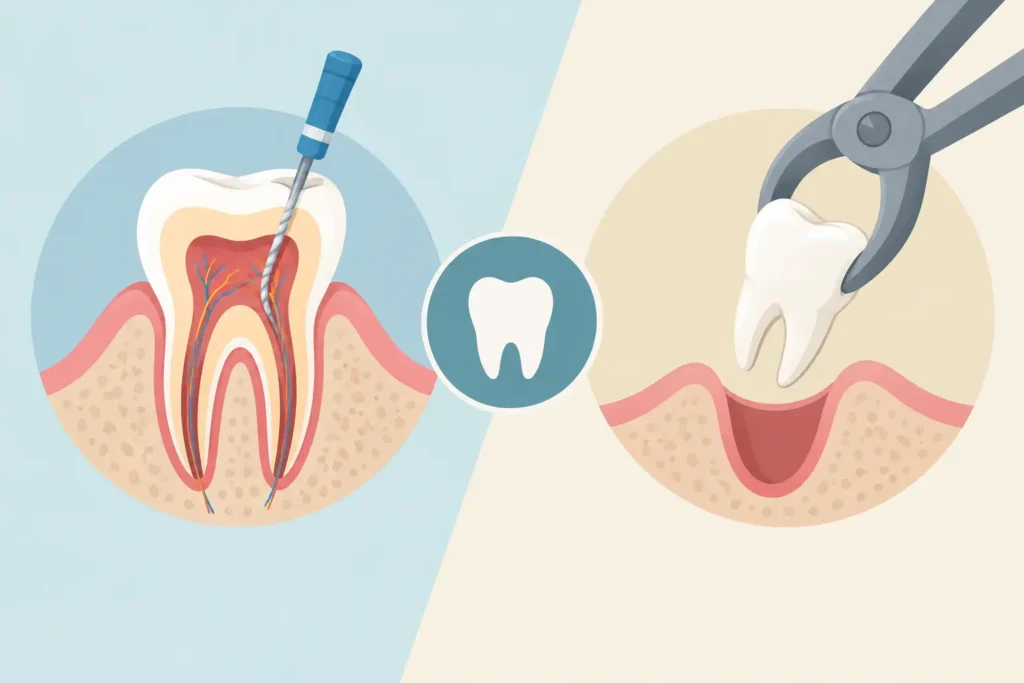
A root canal treats infection or inflammation inside a tooth while allowing the tooth to remain in place. The dentist removes damaged pulp tissue from the small canals inside the roots, cleans and disinfects the space, then seals it. Most back teeth and many heavily treated front teeth need a crown afterward to protect the remaining structure from fracture.
An extraction removes the entire tooth, including its roots. This stops pain and removes infection when the tooth cannot be predictably restored. But it also leaves an open space that may need to be replaced with a dental implant, bridge, or partial denture to help maintain chewing function and prevent nearby teeth from shifting.
Neither option is automatically right for every person. A careful exam and digital X-rays help determine whether there is enough healthy tooth and bone to support a lasting result.
When a Root Canal Can Be the Better Choice
Root canal therapy is often recommended when decay, a crack, trauma, or an old restoration has allowed bacteria to reach the pulp inside the tooth. Symptoms can include lingering sensitivity to hot or cold, pain when biting, swelling, a pimple-like bump on the gums, or a tooth that has become darker than those around it. Some infected teeth cause little or no discomfort, which is one reason regular exams matter.
Keeping your natural tooth has meaningful benefits. Your own tooth root helps preserve the bone around it and maintains the familiar feel of your bite. You can continue chewing without adding a replacement tooth to your treatment plan. For many patients, saving a restorable tooth is also less involved than extracting it and later replacing it with an implant.
A successful root canal is not a temporary patch. With a well-fitting restoration, good home care, and routine dental visits, a treated tooth can function for many years. The restoration matters because a tooth that has lost substantial structure may be more vulnerable to cracking under everyday chewing pressure.
At Renaissance Dental Forest Hills, same-day CEREC technology may allow eligible patients to receive a precisely designed, color-matched ceramic crown in one visit after root canal treatment. Whether same-day crown placement is appropriate depends on the tooth, the extent of infection, and the treatment plan.
Does a root canal hurt?
Modern root canal treatment is designed to relieve pain, not create it. Local anesthetic is used to numb the area, and most patients describe the procedure as feeling similar to receiving a filling. It is common for the tooth and nearby gums to feel tender for a few days afterward, especially if infection was present before treatment.
Fear is understandable, particularly if you have had a painful dental experience in the past. Letting your dental team know about your concerns allows them to explain each step, discuss comfort options, and pace treatment with your needs in mind.
When Extraction May Be Healthier
Sometimes a tooth is too damaged to save predictably. A deep crack that extends below the gumline, extensive decay below the gumline, severe bone loss from gum disease, or a tooth with too little remaining healthy structure may make restoration unreliable. Repeated infections or unsuccessful treatment may also lead to an extraction recommendation.
Extraction may be the better choice when keeping the tooth would require multiple procedures with a poor long-term outlook. Removing a tooth that cannot be restored can prevent ongoing infection, discomfort, and repeated emergency visits. It can also create a clearer path toward a stable replacement.
A wisdom tooth is a common exception to the “save the tooth” principle. Since wisdom teeth often do not contribute meaningfully to chewing, extraction may be recommended when they are impacted, repeatedly infected, causing damage to adjacent teeth, or difficult to keep clean.
For children, treatment decisions require additional care. Baby teeth help guide permanent teeth into position, so preserving them is often beneficial when possible. If a child needs an extraction, the dentist may discuss whether a space maintainer is needed to protect room for the adult tooth.
What Happens After an Extraction?
After a tooth is removed, the jawbone in that area gradually loses stimulation from the missing root. Over time, this can affect the shape of the bone and gums. Nearby teeth may drift into the space, while the opposing tooth can move downward or upward in search of contact. These changes can affect chewing and may make future tooth replacement more complex.
That does not mean every extracted tooth must be replaced in the same way or at the same time. The location of the tooth, your bite, your bone levels, and your overall health all matter. A missing front tooth usually calls for prompt attention because of appearance and speech. Replacing a missing molar may be just as important for chewing balance, though the timing can vary.
A dental implant is often the closest replacement to a natural tooth because it replaces the root as well as the visible crown. After healing, an implant-supported crown can look natural and help preserve bone. Guided implant surgery can support precise treatment planning when an implant is the right option. In other cases, a bridge or removable partial denture may be a practical choice.
In some situations, bone preservation can be discussed at the time of extraction. Planning early gives you more options, even if you are not ready to move forward with a final replacement immediately.
Comparing Time, Cost, and Long-Term Value
The immediate cost of an extraction is often lower than root canal treatment and a crown. But that comparison can be incomplete if the extracted tooth needs to be replaced. An implant, bridge, or denture adds its own cost and treatment timeline, and delaying replacement may allow changes that complicate care later.
A root canal and crown may involve a larger up-front investment, yet retaining a natural tooth can reduce the need for replacement treatment. On the other hand, it is not wise to spend time and money trying to save a tooth with a very uncertain prognosis. The best value is treatment that is clinically sound and built to last.
Insurance benefits, available time, health history, and personal priorities are all valid parts of the conversation. Busy Queens families may also value coordinated care that reduces separate appointments when clinically appropriate. Your dental team can review the expected sequence, fees, insurance considerations, and alternatives before you decide.
Questions That Help You Make the Decision
A clear treatment discussion should help you understand not only what is recommended, but why. Ask whether the tooth is restorable, how much healthy structure remains, whether there is a crack, and what the expected lifespan is with root canal treatment and a crown. If extraction is advised, ask which replacement options fit your situation and whether preserving bone at the extraction visit is recommended.
You can also ask what happens if you wait. Dental infections do not always remain contained, and pain can become more severe without warning. Swelling in the face or jaw, fever, difficulty swallowing, difficulty breathing, or rapidly increasing pain requires urgent dental or medical attention.
The Goal Is a Healthy, Comfortable Smile
Root canal versus extraction is a decision best made with a full view of your oral health, not just the toothache in front of you. A tooth worth saving deserves a thoughtful restoration. A tooth that cannot be saved deserves a careful plan for healing and replacement.
If you are dealing with pain, swelling, a broken tooth, or an old tooth that has started to feel different, scheduling an evaluation can replace uncertainty with a clear path forward. The next step should leave you more comfortable and better prepared to keep smiling, eating, and speaking with confidence.
Comments are closed.
Proudly serving the surrounding areas:
Forest Hills NY • Queens NY • Rego Park NY • Kew Gardens NY • Maspeth NY
Middle VIllage NY • Woodside NY • Sunnyside NY • Jamaica Estates NY • Queens County NY