111-01 Queens
Boulevard,
Forest Hills, NY 11375




Latest Posts
Flossing Dental Bridges Without Damaging Them
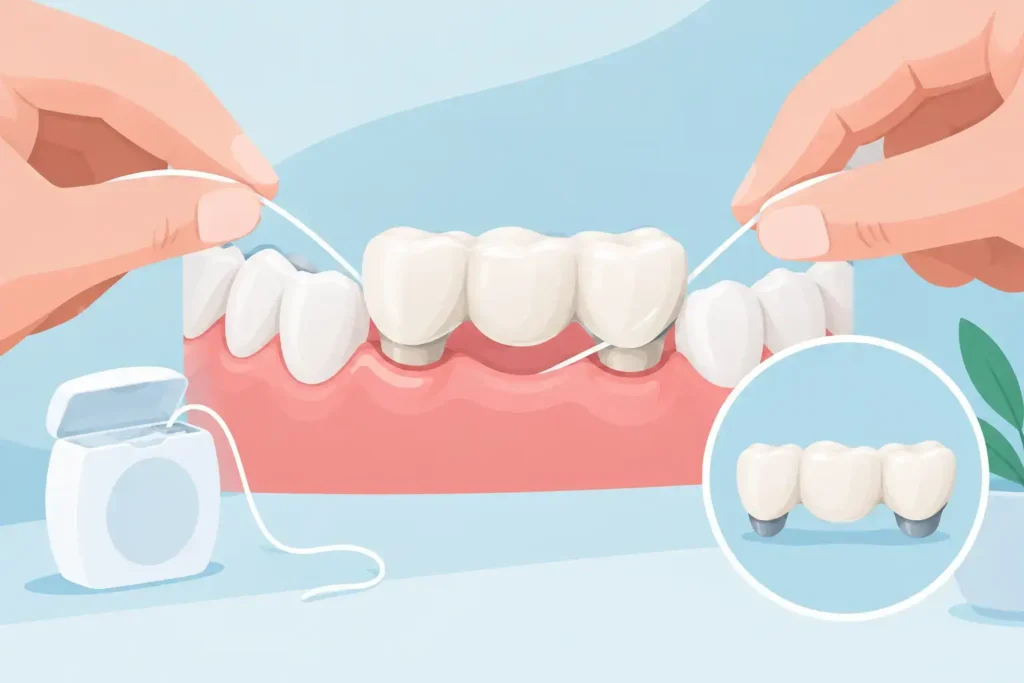
A bridge can restore your smile, bite, and confidence, but it also creates one cleaning challenge: the replacement tooth is attached to neighboring teeth, so ordinary floss cannot pass straight down between them. Flossing dental bridges requires cleaning beneath the artificial tooth as well as along the gumline around the supporting teeth. That extra minute each day can help prevent odor, gum inflammation, decay around the bridge edges, and problems that may shorten the life of your restoration.
A fixed bridge is not something you remove at home. It is designed to feel stable and natural while you eat and speak. Still, plaque and food debris can collect in the small space between the bridge and your gums. A toothbrush reaches the visible surfaces, but it does not reliably clean underneath the replacement tooth. That is where the right flossing method matters.
Why Flossing Dental Bridges Is Different
A traditional bridge has a replacement tooth, called a pontic, held in place by crowns attached to teeth on either side. Those supporting teeth are often called abutment teeth. Since the pontic is connected to the crowns, there is no open contact space above the gumline where you can snap regular floss through as you would between natural teeth.
The underside of the pontic rests close to the gums. This space is intentionally shaped to look natural and support comfort, but it can trap plaque, especially after meals. Bacteria in plaque can irritate gum tissue and contribute to bad breath. If plaque collects around the edges of the supporting crowns, it may also raise the risk of decay or gum disease in the teeth that hold the bridge in place.
This does not mean a bridge is difficult to maintain. It means your home-care routine needs one additional tool and a gentle, consistent technique.
The Best Way to Floss Under a Fixed Bridge
For most patients, a floss threader is the simplest starting point. It is a small, flexible loop with a firm tip that guides floss under the bridge. Super floss, which has a stiffened end, a spongy section, and regular floss, can serve a similar purpose. Your dentist or hygienist can show you which option fits your bridge design and gum contours best.
Start with an 18-inch length of floss. Feed it through the loop of the threader, then guide the firm end into the space under the pontic from the cheek side or tongue side. Do not force it. If the threader does not pass easily, change the angle slightly and use light pressure rather than pushing hard against the gums.
Once the floss is beneath the bridge, remove the threader and hold one end of floss in each hand. Move the floss gently back and forth under the pontic, then sweep it along the gumline. Clean around the inside surfaces of the supporting crowns too. The goal is to disrupt plaque, not to saw aggressively at the tissue.
Pull the floss out from the side when you are finished. Avoid snapping it upward or yanking it through a tight area. If floss repeatedly shreds, catches, or cannot pass where it once could, schedule a dental visit. A rough edge, excess cement, a chipped area, or a change in the bridge may need attention.
A gentle technique protects gums and restorations
Healthy gums may feel slightly tender when you first begin cleaning under a bridge regularly, especially if plaque has been accumulating. That should improve with careful daily cleaning. Persistent bleeding, soreness, swelling, or a foul taste is different. These symptoms can signal gum inflammation, trapped debris, or another concern that deserves a professional evaluation.
Bridges are durable, but they are not indestructible. Never use sharp objects, pins, or improvised tools to dig under a bridge. You could injure your gums or damage the restoration. Gentle cleaning with the proper aid is both safer and more effective.
Which Cleaning Tools Can Help?
Floss threaders and super floss are effective for many fixed bridges, but they are not the only options. The best choice depends on the shape of your bridge, the amount of space beneath it, the health of your gums, and what you can comfortably use every day.
- Floss threaders work well for patients who prefer traditional string floss and need a simple way to guide it beneath the pontic.
- Super floss can be convenient because its stiff end removes the need for a separate threader, while the thicker section helps clean broad spaces.
- Interdental brushes may clean accessible spaces around supporting teeth, but they should fit gently. A brush that is too large can irritate the gums or damage tissue.
- Water flossers can help flush away loose food particles and reduce plaque around bridges and gums. They are especially helpful for patients with limited dexterity, braces, implants, or multiple restorations.
A water flosser is useful, but it is not always a complete substitute for physically cleaning beneath the bridge. For many patients, the most thorough routine combines a water flosser with threaded floss or super floss. Your dental team can recommend a routine based on your specific restoration rather than a one-size-fits-all approach.
A Practical Daily Routine for Bridge Care
Brush twice a day for two full minutes with a soft-bristled toothbrush and fluoride toothpaste. Angle the brush gently at the gumline around the bridge and supporting crowns. Pay attention to the cheek side, tongue side, and biting surfaces. An electric toothbrush can be a helpful option for people who find it easier to maintain consistent technique.
Floss under your bridge at least once daily, ideally before bedtime. Nighttime cleaning matters because plaque and food particles have more time to sit on teeth and gums while you sleep. If food frequently catches under the bridge after lunch or dinner, rinsing with water or using a water flosser can make you more comfortable between brushings.
Do not overlook the rest of your mouth. Clean between all natural teeth, brush your tongue gently, and keep regular preventive visits. A bridge depends on the teeth and gums around it. Protecting that foundation is one of the best ways to protect your investment in your smile.
What If Your Bridge Is Implant-Supported?
An implant-supported bridge needs careful cleaning too, but the technique may be slightly different from cleaning a bridge supported by natural teeth. Dental implants cannot develop cavities, but the gums and bone around them can still become inflamed by bacterial buildup. This inflammation can progress if it is not addressed.
Floss designed for implants, soft interdental brushes, and water flossers are commonly recommended, depending on the bridge design. Avoid wrapping floss tightly around an implant or using excessive force. Some patients have a fixed full-arch bridge with several replacement teeth joined together, which can make access more complex. In that situation, customized instruction is particularly valuable.
At Dental Renaissance, patients with bridges and implants can receive guidance tailored to their restoration, gum health, and daily routine. A few minutes of hands-on instruction can remove the guesswork and make home care feel much more manageable.
Signs You Should Call Your Dentist
A bridge should feel secure and comfortable. Contact your dental office if you notice ongoing bleeding when flossing, swollen gums, persistent bad breath despite cleaning, pain when biting, sensitivity near a supporting tooth, or food consistently wedged in a new spot. A loose bridge, cracked porcelain, or a change in your bite also needs prompt care.
Do not stop flossing just because your gums bleed. Bleeding often occurs when inflammation is present, and gentle plaque removal is part of improving gum health. However, persistent or heavy bleeding should be evaluated, particularly if it lasts longer than a week or is accompanied by pain or swelling.
Regular professional cleanings are also essential. Some areas around a bridge are difficult to reach at home, even with excellent technique. Your hygienist can remove hardened buildup and check the bridge margins, supporting teeth, and gum tissue for early changes.
A well-made bridge can serve you beautifully for years, but its long-term success is built into ordinary moments at home. Take the extra minute to clean beneath it each night, use a tool that feels comfortable in your hands, and ask for help if something no longer feels right. Small, consistent care protects the healthy smile your bridge was designed to restore.
Comments are closed.
Proudly serving the surrounding areas:
Forest Hills NY • Queens NY • Rego Park NY • Kew Gardens NY • Maspeth NY
Middle VIllage NY • Woodside NY • Sunnyside NY • Jamaica Estates NY • Queens County NY