111-01 Queens
Boulevard,
Forest Hills, NY 11375



Latest Posts
Ceramic Versus Zirconia Crowns: Which Fits?
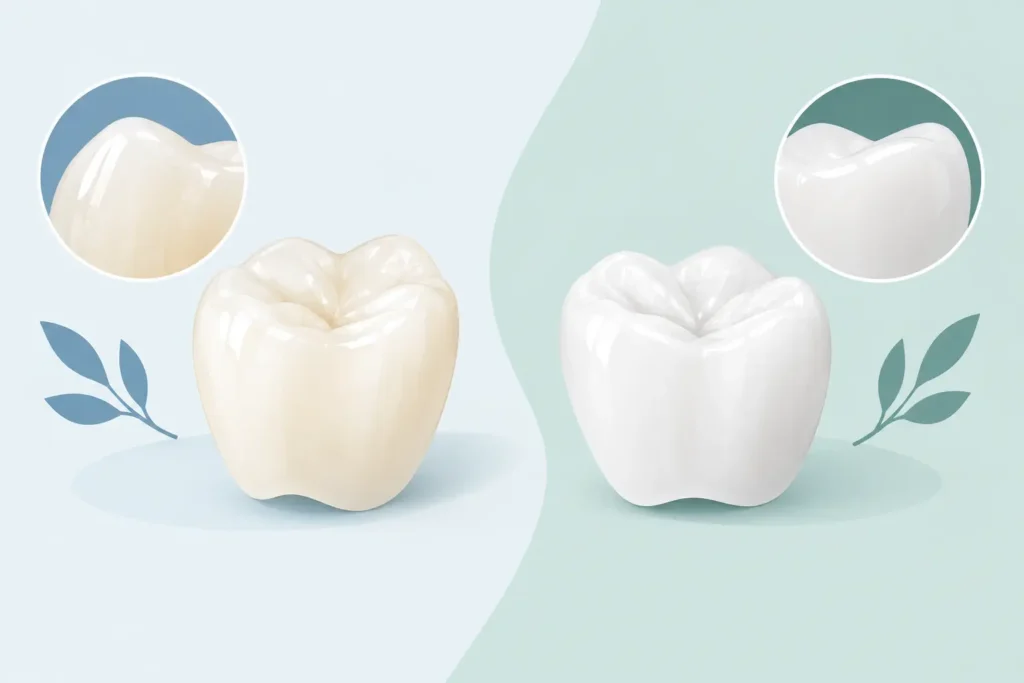
A crown should do more than cover a damaged tooth. It needs to feel comfortable when you bite, blend with your smile, and protect the tooth for years to come. When patients ask about ceramic versus zirconia crowns, they are usually trying to balance two priorities: a natural-looking result and the strength to handle everyday eating.
The right answer depends on where the crown will be placed, how much biting force it will receive, the condition of the remaining tooth, and your cosmetic goals. At Renaissance Dental Forest Hills, treatment planning begins with those details, not with a one-size-fits-all material recommendation.
First, a helpful clarification about crown materials
The language around dental crowns can be confusing because zirconia is technically a type of ceramic. In everyday dental conversations, however, “ceramic crown” often means a highly esthetic porcelain or glass-ceramic restoration, such as lithium disilicate. “Zirconia crown” generally refers to a crown made from zirconium dioxide, a very strong dental ceramic.
Both are metal-free options. Both can be color matched to neighboring teeth. Both are designed to be biocompatible and durable. The meaningful differences are usually translucency, strength, preparation requirements, and how the material suits a particular tooth.
Ceramic versus zirconia crowns: the central trade-off
Traditional esthetic ceramics are valued for how naturally they reflect and transmit light. That quality can make them an excellent choice for front teeth, where subtle variations in color and translucency matter most. A well-designed ceramic crown can closely resemble natural enamel rather than looking opaque or overly uniform.
Zirconia is known for its exceptional fracture resistance. It is often a strong option for back teeth, where molars and premolars absorb heavy chewing forces. It can also be considered for patients who clench or grind their teeth, although a nightguard may still be recommended to protect both the crown and the rest of the smile.
Modern multilayer zirconia has improved considerably in appearance. It can offer more natural shading and translucency than earlier zirconia materials, making it suitable for many visible areas of the mouth. Still, when the priority is the most lifelike appearance on a highly visible front tooth, another ceramic may sometimes have an advantage.
The best material is not always the strongest one on paper. It is the material that provides the right combination of strength, fit, appearance, and tooth preservation for your specific situation.
When a ceramic crown may be the better choice
A ceramic crown is often considered when appearance leads the decision. For example, a front tooth that has been weakened by a large filling, fracture, or root canal may need a restoration that disappears into the smile as naturally as possible. Glass ceramics can reproduce the light-reflecting qualities of natural enamel especially well.
Ceramic can also be an appropriate option for teeth that are not exposed to unusually high bite pressure. Your dentist will evaluate your bite, the amount of healthy tooth structure still present, and the shade of adjacent teeth before recommending a material.
For many busy patients in Queens, another advantage is the possibility of same-day treatment. With CEREC digital dentistry, certain ceramic crowns can be designed, milled, and placed in one visit. Instead of wearing a temporary crown and returning weeks later, eligible patients can leave with a custom, color-matched restoration the same day.
That convenience is significant, but it should never override clinical needs. Some cases require a lab-made crown, additional planning, or a different material to achieve the most reliable long-term result.
When zirconia may make more sense
Zirconia is frequently recommended for teeth that need substantial reinforcement. Back teeth do the demanding work of grinding food, and a crown in that area must tolerate repeated force over time. Zirconia’s strength makes it a dependable choice for many molars, bridges, and teeth with limited remaining structure.
It may also be useful when a patient has a history of fractured crowns or noticeable grinding. The material’s durability can provide an added margin of protection, though no crown is indestructible. Chewing ice, biting hard objects, and untreated nighttime grinding can damage even very strong restorations.
A zirconia crown may be made as a solid, more opaque restoration or as a more translucent multilayer option. Your dentist can help determine which version is appropriate. If a dark underlying tooth, metal post, or discoloration needs to be masked, a less translucent zirconia may be helpful. If the tooth is visible when you smile, a more esthetic zirconia design may be preferred.
Your bite matters as much as the material
A crown can be beautifully made and still fail prematurely if it does not fit the bite correctly. Even a small area of excessive pressure can lead to discomfort, chipping, loosening, or stress on the tooth beneath the crown.
That is why crown planning includes more than selecting a shade. Your dentist evaluates how your upper and lower teeth meet, whether you clench or grind, the health of your gums, and whether the tooth needs buildup or root canal treatment before it is crowned. Digital scanning and precise design can help create a crown with a comfortable fit and natural contours that are easier to keep clean.
The amount of tooth structure matters, too. A tooth with a small fracture is different from a tooth that has lost most of its walls to decay or an old filling. In some situations, the way a crown distributes force is more important than its cosmetic characteristics alone.
What about comfort, safety, and sensitivity?
Both ceramic and zirconia crowns are commonly used because they are well tolerated by gum tissue and do not contain a metal exterior. Some patients prefer metal-free restorations for cosmetic reasons, while others appreciate that there is no dark metal line near the gums.
Temporary sensitivity after crown preparation is possible, especially if the tooth was already inflamed or deeply decayed. Most sensitivity improves as the tooth settles, but persistent pain, pressure when biting, or sensitivity that worsens should be checked promptly. A crown protects a tooth, but it does not prevent decay at the edge of the crown or gum disease around it.
Daily brushing, cleaning between teeth, and regular dental visits remain essential. With good home care and professional maintenance, both ceramic and zirconia crowns can serve patients well for many years.
How the crown process works
After examining the tooth and taking any needed X-rays, your dentist removes decay or weakened material and shapes the tooth so the crown can fit securely. A digital scan captures detailed images of the prepared tooth and surrounding teeth, replacing the need for traditional impression material in many cases.
For eligible same-day ceramic crowns, the restoration can be designed digitally, milled in the office, adjusted for fit and bite, and bonded or cemented during the same appointment. This approach can be particularly helpful when a broken or heavily filled tooth needs timely protection.
For other cases, your dentist may recommend a crown fabricated by a dental laboratory. You may wear a temporary crown while the final restoration is made. This route can be appropriate for complex cosmetic matching, specialized material choices, implant restorations, or more extensive treatment plans.
Questions worth asking before choosing
A clear conversation can make the decision feel much easier. Ask which material is recommended for your specific tooth and why. Find out whether you show signs of grinding, whether the tooth needs additional treatment first, and how the selected material will look beside your natural teeth.
It is also reasonable to ask whether same-day treatment is appropriate for your case, what kind of care the crown will need, and what symptoms should prompt a call after placement. A thoughtful dentist will explain the recommendation in plain language and make sure you understand the options.
A crown is an investment in a tooth you rely on every day. Whether ceramic or zirconia is the better fit, the goal is the same: a restoration that lets you eat, speak, smile, and get on with life with confidence.
Comments are closed.
Proudly serving the surrounding areas:
Forest Hills NY • Queens NY • Rego Park NY • Kew Gardens NY • Maspeth NY
Middle VIllage NY • Woodside NY • Sunnyside NY • Jamaica Estates NY • Queens County NY