111-01 Queens
Boulevard,
Forest Hills, NY 11375


Latest Posts
- Full Mouth Dental Implants Cost: What Affects It
- Is Laser Treatment for Gum Disease Right?
- Multilingual Dentist Forest Hills for Your Family
- Teeth Whitening for Sensitive Teeth Safely
- Permanent Dentures Versus Implants Compared
Archives
Is Laser Treatment for Gum Disease Right?
A little bleeding when you brush can seem easy to ignore, especially when work, school, and family schedules are already full. But bleeding gums, persistent bad breath, tenderness, or gums that appear to pull away from the teeth can be early signs of periodontal disease. Laser treatment for gum disease may be an option for some patients who need focused care for infected gum tissue and bacterial buildup – but the right plan depends on the stage of disease, the health of the bone supporting your teeth, and your individual needs.
At Renaissance Dental Forest Hills, periodontal care begins with a careful evaluation, not a one-size-fits-all procedure. The goal is to control infection, protect your natural teeth whenever possible, and make treatment as comfortable and convenient as possible for patients throughout Forest Hills and Queens.
What Gum Disease Does Below the Gumline
Gum disease starts when bacterial plaque collects along and below the gumline. In its earliest stage, called gingivitis, gums may become red, swollen, or prone to bleeding. Gingivitis can often be reversed with professional cleanings and consistent home care.
Periodontitis is more advanced. The gums can separate from the teeth, creating periodontal pockets where bacteria and hardened deposits collect. Over time, the inflammation can damage the connective tissues and bone that hold teeth in place. A tooth may begin to feel loose, spaces may develop, and chewing can become uncomfortable.
This process is not always painful. That is why routine exams and periodontal measurements matter. Your dental team measures the space between the gums and teeth, reviews X-rays when needed, and looks for signs of inflammation, recession, bone loss, and active infection. Those findings help determine whether you need a routine cleaning, scaling and root planing, periodontal maintenance, laser therapy, or a referral for more complex surgical care.
How Laser Treatment for Gum Disease Works
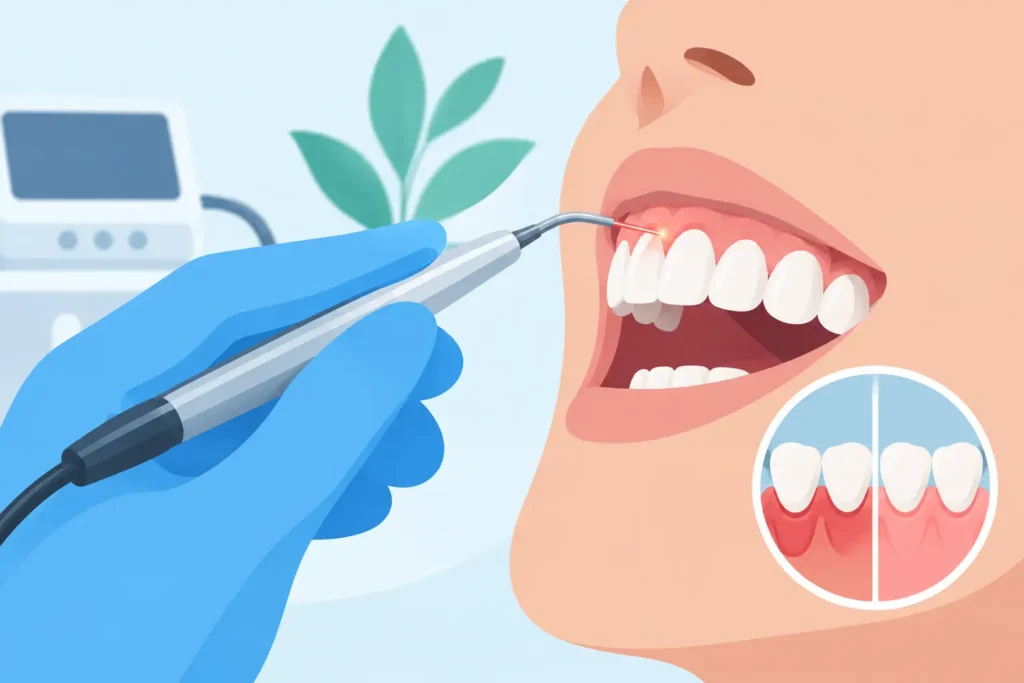
Dental lasers use concentrated light energy to target certain types of soft tissue and bacteria. During periodontal treatment, a laser may be used to reduce inflamed or diseased tissue within a gum pocket and help lower the bacterial load around the tooth. The treatment is precise, allowing the dentist to focus on the affected area while preserving as much healthy tissue as possible.
Laser care is often used alongside thorough cleaning below the gumline. Scaling removes hardened deposits from tooth roots, while root planing smooths those root surfaces so bacteria have a harder time attaching. Depending on the clinical situation, laser treatment may follow or be incorporated into this process to help disinfect the pocket and support tissue healing.
For many patients, the practical appeal is clear. Laser treatment can be gentler than traditional techniques in appropriate cases, often with less bleeding, swelling, and post-treatment discomfort. Some patients also appreciate that certain procedures can be completed efficiently during an office visit. Still, comfort and recovery vary from person to person, and laser treatment is not a substitute for removing calculus or maintaining excellent daily oral hygiene.
What an Appointment May Feel Like
Your visit starts with an examination and a conversation about your symptoms, health history, medications, and goals. Local anesthetic may be recommended if the gums are sensitive or deeper pockets require extensive cleaning. Once you are comfortable, the dentist uses the laser as part of the planned periodontal procedure.
You may notice a mild warmth or pressure, but you should not feel sharp pain. Afterward, the gums can feel tender for a short time. Your dental team will give you personalized instructions, which may include gentle brushing, careful flossing or use of interdental cleaners, and guidance about foods or activities immediately after treatment.
The follow-up is just as meaningful as the procedure itself. Healing gums need time, and periodontal pockets must be measured again to see how they respond. Regular periodontal maintenance visits help manage bacteria before it can cause renewed damage.
When Laser Therapy May Be a Good Fit
Laser therapy can be helpful when inflammation and bacteria remain below the gumline, particularly for patients receiving nonsurgical periodontal treatment. It may also be considered when a patient has bleeding pockets, localized areas of gum infection, or gum tissue that needs precise treatment.
However, the laser is a tool, not a cure by itself. If there is significant tartar beneath the gums, it still needs to be removed. If periodontitis has caused substantial bone loss, deep pockets, tooth mobility, or complex gum defects, additional treatment may be necessary. In some cases, traditional periodontal surgery, grafting, or care from a periodontist offers the more predictable path to preserving oral health.
Certain health factors can affect treatment and healing. Smoking or vaping, uncontrolled diabetes, dry mouth, pregnancy-related hormonal changes, immune conditions, and some medications can all influence gum health. None of these automatically rules out laser treatment, but they should be part of an honest treatment discussion. Managing the factors that contribute to periodontal disease is often as important as the procedure chosen.
Benefits and Trade-Offs to Understand
Laser periodontal treatment can offer real benefits: targeted treatment, reduced bleeding in many cases, and a potentially more comfortable recovery. For busy Queens families and professionals, an efficient in-office approach can also be valuable when it fits the needed care.
There are trade-offs. Insurance coverage differs by plan, and some laser-related services may involve out-of-pocket costs. Results also depend on the severity of disease and how well a patient maintains care afterward. A laser cannot rebuild bone that has already been lost, and it cannot prevent gum disease from returning if plaque is allowed to accumulate again.
The best question is not simply, “Can a laser treat my gums?” It is, “What treatment gives me the best chance of controlling this disease and keeping my teeth healthy long term?” A clear examination and personalized plan provide a more reliable answer than a treatment trend or a promise of a quick fix.
Caring for Your Gums After Treatment
Periodontal disease is manageable, but it requires an ongoing partnership between home care and professional visits. Brush twice daily with a soft-bristled toothbrush and fluoride toothpaste, cleaning gently at the gumline. Clean between your teeth every day with floss, interdental brushes, or another tool recommended for your specific spaces and restorations.
Keep the maintenance schedule your dentist recommends. Some patients benefit from periodontal maintenance every three or four months rather than a standard twice-yearly cleaning, particularly after treatment for periodontitis. These appointments allow the dental team to remove bacterial buildup in areas that are difficult to reach at home and monitor changes before they become more serious.
If you smoke, reducing or quitting can make a meaningful difference for your gums and your body’s ability to heal. If diabetes or another health condition is part of the picture, keeping it well managed supports periodontal treatment too. Your mouth is connected to your overall health, and your dental team can work alongside the rest of your healthcare providers when appropriate.
Questions Patients Often Ask
Does laser gum treatment hurt?
Many patients find laser-assisted periodontal treatment comfortable, especially with local anesthetic when needed. Sensitivity afterward is usually manageable, but your experience will depend on the extent of treatment and the condition of your gums.
Can laser treatment save loose teeth?
It may help control infection around a tooth, but it cannot guarantee that a loose tooth can be saved. The outlook depends on bone support, pocket depth, tooth mobility, bite forces, and how the area responds to treatment. Early care gives teeth the best opportunity to remain stable.
Will gum disease come back after laser treatment?
It can. Periodontal disease is caused by bacteria and influenced by daily habits and health conditions. Consistent home care and periodontal maintenance are essential for protecting the results of any treatment.
Gums that bleed, feel swollen, or seem to be pulling away from your teeth deserve timely attention, even if they are not painful. A personalized periodontal evaluation can clarify what is happening below the gumline and help you choose a treatment approach that supports a healthier, more comfortable smile for years to come.
Comments are closed.
Proudly serving the surrounding areas:
Forest Hills NY • Queens NY • Rego Park NY • Kew Gardens NY • Maspeth NY
Middle VIllage NY • Woodside NY • Sunnyside NY • Jamaica Estates NY • Queens County NY