111-01 Queens
Boulevard,
Forest Hills, NY 11375

Latest Posts
7 Daily Steps for Preventing Baby Bottle Tooth Decay
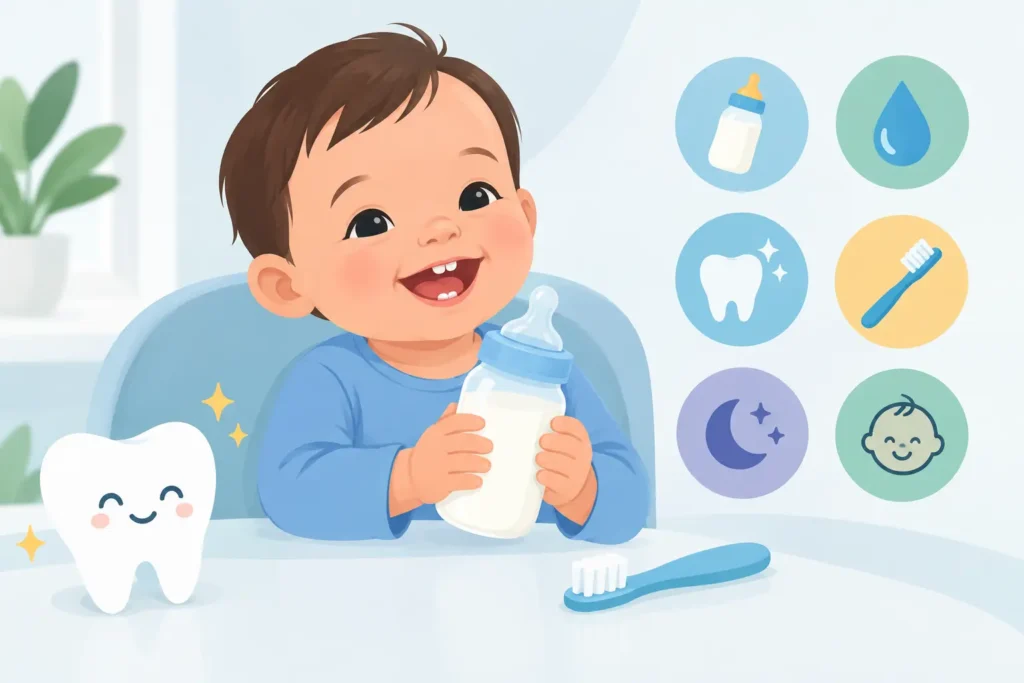
A baby can develop cavities soon after the first tooth appears – sometimes before parents notice any discomfort. Preventing baby bottle tooth decay is less about perfect routines and more about reducing the amount of time sugary liquids stay on little teeth, especially during naps and overnight. A few consistent habits can protect your child’s comfort, smile, and developing oral health.
What baby bottle tooth decay really means
Baby bottle tooth decay, also called early childhood caries, is tooth decay in infants and young children. It often begins on the upper front teeth, where parents may see dull white spots near the gumline. Without care, those areas can turn yellow, brown, or black and may eventually cause sensitivity, infection, or trouble eating.
The name can be misleading. A bottle itself does not cause a cavity. Decay happens when bacteria in the mouth use sugars from milk, formula, juice, sweetened drinks, or foods to make acids. Those acids repeatedly weaken tooth enamel. When a child sips or falls asleep with a bottle over a long period, the teeth are exposed again and again while saliva flow naturally slows down.
Breastfeeding supports infant nutrition and bonding, and it is not a reason to skip dental care. Once teeth are present, frequent nighttime feeding after other teeth-cleaning habits have been established can raise cavity risk for some children. Every family’s feeding routine is different, so a pediatric dentist can help parents make practical adjustments without judgment.
1. Keep bottles for feeding, not soothing
Babies often find sucking calming, particularly when they are tired or unsettled. The concern is not an occasional bottle. It is allowing a bottle containing milk, formula, juice, or another sweet drink to remain in the crib or stroller for long stretches.
Try to offer the bottle at feeding time, then remove it when your child is finished. If your child needs something to settle at bedtime or after brushing, plain water is the tooth-friendly choice. A clean pacifier can also be appropriate for many babies, but avoid dipping it in honey, sugar, syrup, or other sweet substances.
If your baby relies on a bottle to fall asleep, make changes gradually. For example, move the bottle earlier in the bedtime routine, follow it with cleaning, then add a calming activity such as a book, cuddles, or a lullaby. Consistency matters more than changing everything in one difficult night.
2. Make water the only overnight drink
Milk and formula contain natural sugars, even when no sugar has been added. Juice, sweetened teas, sports drinks, and flavored waters can be even more harmful to teeth. During the day, these drinks are less likely to cause damage when they are served with a meal and followed by normal saliva flow and oral care. At night, their effects can linger.
After the final feeding and cleaning of the day, offer only plain water if your child is thirsty. Do not dilute formula to make it less sugary. Formula should always be prepared exactly as directed for your child’s nutrition and safety. Instead, separate the final formula feeding from sleep and clean the teeth afterward.
Juice is not necessary for infants, and young children do best with water and milk as their usual drinks. If juice is offered to an older toddler, serve a small amount with a meal in a cup rather than letting the child sip it throughout the day.
3. Clean gums before teeth arrive
Cavity prevention starts before you can see a tooth. After feedings, gently wipe your baby’s gums with a clean, soft, damp cloth. This helps remove milk residue and gets your child accustomed to having their mouth cleaned.
When the first tooth comes in, switch to a small, soft-bristled toothbrush. Brush twice a day, including after the last feeding before bed. For children younger than 3, use a smear of fluoride toothpaste about the size of a grain of rice. Use only a small amount, angle the brush gently along the gumline, and brush for them rather than expecting them to do it independently.
Children ages 3 through 6 can use a pea-sized amount of fluoride toothpaste with close adult supervision. Encourage them to spit out the toothpaste, but do not worry if a younger child cannot do this perfectly yet. The small recommended amount is designed for this stage of development.
4. Help toddlers transition from bottle to cup
As children become more mobile and independent, sipping from a bottle all day can become a hidden source of sugar exposure. A cup helps limit that habit and supports normal oral development. Many children can begin learning to use an open cup or straw cup around 6 months, when they are ready for complementary foods.
There is no need to force a sudden transition if it creates stress for everyone. Start by serving water in a cup with meals, then replace one daytime bottle at a time. Aim to phase out bottles between 12 and 18 months, unless your child’s pediatrician or dental team recommends a different approach for a medical or developmental reason.
Sippy cups are useful for travel and practice, but they should not become all-day drink containers. A no-spill cup can still bathe teeth in milk or juice when used frequently. Treat it like a cup at meals and snacks, not a comfort item to carry from room to room.
5. Build a predictable bedtime routine
A simple sequence makes cavity prevention easier when evenings are busy. Give your child their final milk or formula feeding, brush their teeth, then move into pajamas, a story, and sleep. Once brushing is finished, skip snacks and sweet drinks.
Toddlers may test this boundary, especially if they are used to milk at bedtime. Calm, repeated routines work better than making brushing feel like a punishment. Let your child choose between two toothbrush colors, sing a short song while brushing, or have them brush first before an adult finishes the job.
Adults should continue helping with brushing until a child has the hand control to write neatly on their own, often around ages 6 to 8. Until then, a child may enjoy participating but cannot reliably clean every tooth surface.
6. Watch for early warning signs
Early cavities may not hurt. Check your child’s teeth regularly by lifting the lip and looking along the gumline, especially on the front upper teeth. Chalky white spots, brown areas, pitting, or a rough-looking surface deserve a dental evaluation.
Call promptly if your child has tooth pain, swelling, a pimple-like bump on the gums, persistent bad breath, trouble chewing, or changes in sleep and appetite. Cavities in baby teeth are not something to wait out. These teeth help children chew, speak clearly, and hold space for permanent teeth. Early treatment is usually simpler and more comfortable than waiting for a problem to become urgent.
Some children have a higher risk of decay because of dry mouth, frequent snacking, certain medications, enamel differences, or a history of cavities. If your child takes liquid medicine regularly, ask the prescribing clinician or pharmacist whether it contains sugar and how to time it around brushing. Do not stop or change medication without medical guidance.
7. Schedule a dental visit by the first birthday
A child should see a dentist when the first tooth appears or by age 1, whichever comes first. This first visit is often brief and gentle. It gives the dental team a chance to check tooth development, review feeding and brushing habits, assess cavity risk, and answer questions that may be hard to sort through online.
For Queens families, choosing a dental home early means you have a familiar team when a question or concern arises. At Renaissance Dental Forest Hills, family-focused preventive visits can grow with your child, from early guidance on brushing and fluoride to routine cleanings as they get older.
A healthy habit that grows with your child
Preventing baby bottle tooth decay does not require fear around feeding or an elaborate schedule. It asks for a few protective boundaries: clean teeth every day, avoid putting sweet drinks to bed, and seek care early when something looks different. Those small routines give your child a strong start and make future dental visits feel like a normal part of staying healthy.
Comments are closed.
Proudly serving the surrounding areas:
Forest Hills NY • Queens NY • Rego Park NY • Kew Gardens NY • Maspeth NY
Middle VIllage NY • Woodside NY • Sunnyside NY • Jamaica Estates NY • Queens County NY